

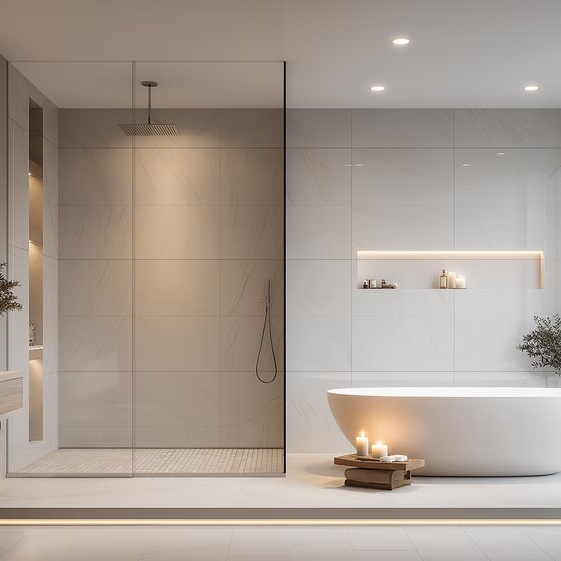
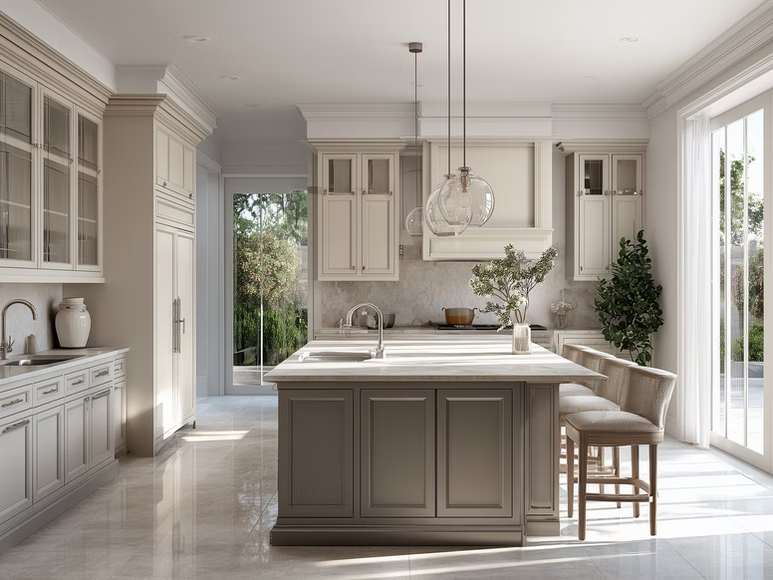
I cared most about the kitchen working for two people at once. They fixed the layout, added counter space, and put lighting where we actually need it. The bathroom remodel was secondary, but the shower and tile look just as careful. No drama on the estimate. Questions got answered the same day. That’s rare.


Bathroom came out great. Walk-in shower, new vanity, good lighting. Kitchen update was even better. Would hire them again.

Years of putting it off, we finally gutted the kitchen and master bath. The new layout, cabinets, and tiled shower came out better than the pictures they showed us. The crew was respectful of our schedule and left the house clean every evening. The estimate held and they took care of the punch list quickly. I strongly recommend Trusst.

Attention to the little details (hardware, grout, trim) really stood out during my bathroom remodel. Project stayed organized and they cleaned up properly every evening. Recommend them without reservation.

We needed a kitchen update and a complete bathroom renovation in a smaller home. They maximized the space without making it feel crowded. Cabinets, counters, and tile all look custom. Comm was clear from start to finish and there were no last-minute extras.

Craftsmanship, communication, and cleanliness were all better than previous contractors we’ve used. Finished on time and exactly as quoted. Already planning the next project with them.

Exellent Work, Very good Company.
Exellent Management from Shay and Gili.
Thank you very much for everything.
I would take this Company again and again.

We renovated our summer house with Trusst, the process was seamless, the team is highly professional and showed up to work every single day. Finishes were top of the line and we are very satisfied

We recently hired Trusst Construction to remodel our bathroom and they did an incredible job. The quality of the work was outstanding and every detail was done with care. The team was professional, communicative, and reliable throughout the entire project.
With two babies under two, keeping our home clean during construction was a huge priority. They did an amazing job containing the mess and keeping everything as clean as possible.
Like any renovation, there were a few hiccups, but what set them apart was how professionally they handled them. Gil was great to work with, always in touch with us, and helped us choose the fixtures, vanity, and tile to make sure everything worked well together in our space.
I would absolutely recommend them and wouldn't hesitate to work with them again.

So we had these guys renovate our basement and turns out we should have done this earlier. I am glad my experience with them was good. Small delays on some days but overall it was a project well executed. I will definitely use them if I ever need my ADU coberated


Related Articles
People Also Ask
For homeowners in Miami, Miami Beach, and Hialeah, the availability of a $25,000 ADU grant can significantly offset the cost of adding an accessory dwelling unit. These grants are typically offered through local or state housing programs aimed at increasing affordable housing inventory. To qualify, you must meet specific income limits, property ownership requirements, and zoning regulations. The grant funds can often be used for pre-development costs, construction, or permitting fees. For the most current and detailed guidance on eligibility, the application process, and how this grant integrates with local building codes, we recommend reviewing our internal article titled 'ADU Construction in Miami-Dade County: The Most Complete Zoning, Permitting, and Turnkey Cost Guide for 2026'. You can access it here: ADU Construction in Miami-Dade County: The Most Complete Zoning, Permitting, and Turnkey Cost Guide for 2026. Trusst Construction advises consulting with a qualified professional to ensure your project meets all grant criteria.
When planning an Accessory Dwelling Unit (ADU), the first step is to secure detailed building plans that comply with local zoning codes, including setback requirements, height limits, and lot coverage. In Miami-Dade County, these plans must be stamped by a licensed architect or engineer and include structural, electrical, and plumbing layouts. For a comprehensive guide on navigating these regulations and understanding turnkey costs, refer to our internal article ADU Construction In Miami-Dade: Zoning, Permitting, And Turnkey Cost Guide. Trusst Construction emphasizes that accurate plans are critical for a smooth permitting process, as they help avoid costly revisions. Always verify that your design meets current Florida Building Code standards to ensure safety and compliance.
An ADU, or Accessory Dwelling Unit, is a secondary, self-contained residential structure built on the same lot as a primary home. These units, often called granny flats or in-law suites, include their own kitchen, bathroom, and sleeping area. For homeowners in Miami, Miami Beach, and Hialeah, ADUs offer a practical way to generate rental income or provide housing for family members. However, local zoning laws and permitting requirements are strict and vary by municipality. For a complete breakdown of regulations, costs, and the turnkey process specific to our service area, please refer to our internal article ADU Construction In Miami-Dade: Zoning, Permitting, And Turnkey Cost Guide. Trusst Construction can help you navigate these complex local codes to determine if your property qualifies.
The term "ADU house" refers to an Accessory Dwelling Unit, a secondary residential structure built on the same lot as a primary home. In Miami, Miami Beach, and Hialeah, these units are a popular solution for creating rental income or housing for family members. The process involves strict adherence to local zoning codes, which dictate size limits, setback requirements, and parking provisions. Before construction, you must secure the proper permits from the city or Miami-Dade County. For a comprehensive breakdown of these regulations, costs, and the turnkey process, please refer to our internal guide ADU Construction In Miami-Dade: Zoning, Permitting, And Turnkey Cost Guide. Trusst Construction emphasizes that professional planning is essential to navigate these local requirements successfully.
For homeowners in Miami, Miami Beach, and Hialeah, an Accessory Dwelling Unit (ADU) must comply with strict local zoning codes. Key requirements typically include a maximum size of 800 square feet, a minimum lot size, and a requirement that the property owner resides on-site. The unit must have its own separate entrance, kitchen, and bathroom, and cannot be used for short-term rentals. Parking requirements vary by municipality, and all construction must adhere to Florida Building Code standards for safety and energy efficiency. For a complete breakdown of these regulations, including turnkey cost estimates and step-by-step permitting guidance, Trusst Construction recommends reviewing our internal article titled ADU Construction In Miami-Dade: Zoning, Permitting, And Turnkey Cost Guide. This resource provides the most current and detailed information for your specific project.