Selecting a low-maintenance exterior finish in Miami requires balancing High-Velocity Hurricane Zone structural compliance with extreme resistance against UV radiation, salt-laden humidity, and wind-driven rain. High-performance fiber cement, architectural aluminum cladding, and elastomeric-coated stucco deliver thirty to fifty years of structural integrity when engineered over an integrated weather-resistive barrier.
We have spent decades remodeling single-family estates and commercial structures across South Florida, observing firsthand how coastal exposure degrades inferior wall coverings. Standard paints chalk within three years, unsealed masonry absorbs moisture until efflorescence destroys structural bond strength, and improper metal fasteners corrode into structural failures. Modern building science allows us to eliminate these failure points by pairing structural material science with rigorous mechanical installation methods.
Table of Contents
Environmental Stressors in Miami High-Velocity Hurricane Zones
Miami-Dade County operates within a High-Velocity Hurricane Zone designation, requiring exterior cladding systems to withstand design wind speeds reaching 175 miles per hour under current ASCE 7-22 calculations. Exterior wall assemblies must pass rigorous cyclic pressure and missile impact testing to receive a local Notice of Acceptance or state approval from the Miami-Dade County Product Control Section. Beyond wind loads, relentless solar radiation breaks down standard organic paint resins while average relative humidity above 75 percent feeds continuous biological growth.
Coastal exposure introduces salt aerosols that accelerate electrolytic corrosion on non-isolated metal substrates and corrode standard carbon steel mechanical fasteners. Porous substrates like standard masonry absorb atmospheric moisture, which expands during intense thermal shifts and causes surface delamination. We routinely encounter exterior systems where rain penetrations trapped behind non-vented cladding destroy interior framing and subflooring long before the surface cladding shows physical wear.
To protect building envelopes against these combined factors, exterior wall assemblies must comply with the structural weather-proofing mandates outlined in the Florida Building Code 8th Edition. Adhering to these standards ensures that moisture drainage planes, flashing details, and wall claddings operate as a unified defense against coastal degradation.
Top Resilient Exterior Finish Options for Miami Properties
Selecting the appropriate exterior cladding for a South Florida building involves evaluating tensile strength, thermal movement capabilities, moisture permeability, and maintenance requirements over a fifty-year lifecycle. Fiber cement siding, elastomeric-coated stucco, fluoropolymer architectural aluminum panels, and engineered masonry represent the most dependable systems available for our tropical climate.
Factory-Finished Fiber Cement Siding
Factory-prefinished fiber cement delivers exceptional impact resistance, non-combustibility, and absolute immunity to wood-boring insects and rot in tropical climates. Formulated from Portland cement, silica sand, and cellulose fibers, these high-density boards remain dimensionally stable under continuous moisture cycling without cracking or warping.
Factory-baked fluoropolymer or high-grade acrylic coatings achieve superior color retention under South Florida sun compared to field-applied paints. When mechanically fastened to pressure-treated furring channels with stainless steel blind nails, prefinished fiber cement wall assemblies withstand high wind uplift pressures while providing continuous sub-panel ventilation.
- Pre-baked finish systems eliminate field painting delays during the summer rainy season.
- Impervious to termite infestation, fungal growth, and wood-rot organisms.
- Approved for High-Velocity Hurricane Zone installation when fastened to engineered shear substrates.
- Requires only low-pressure surface washing with neutral detergents every two to three years.
Stucco Systems Enhanced with Elastomeric Acrylic Membranes
Traditional cementitious stucco provides unmatched architectural versatility and continuous fire resistance, but its rigid physical matrix remains vulnerable to hairline stress cracking. Applying a 100 percent acrylic elastomeric topcoat creates a continuous, high-build flexible membrane that spans up to one-sixteenth of an inch of dynamic crack movement without rupturing.
This rubberized membrane prevents liquid water intrusion while allowing internal water vapor to escape from the wall assembly, protecting interior wall framing from dry rot. Reflective elastomeric formulations lower exterior wall surface temperatures by deflecting thermal radiation, which directly reduces solar cooling loads for interior air conditioning systems.
- Flexible elastomeric coatings expand and contract during extreme daily thermal cycles.
- Water-repellent barrier stops salt spray penetration into concrete block substrates.
- Smooth and textured finish options preserve classic South Florida architectural aesthetics.
- Typical maintenance cycle requires a surface rinse every two years and recoating every twelve to fifteen years.
Architectural Aluminum and Marine-Grade Metal Cladding
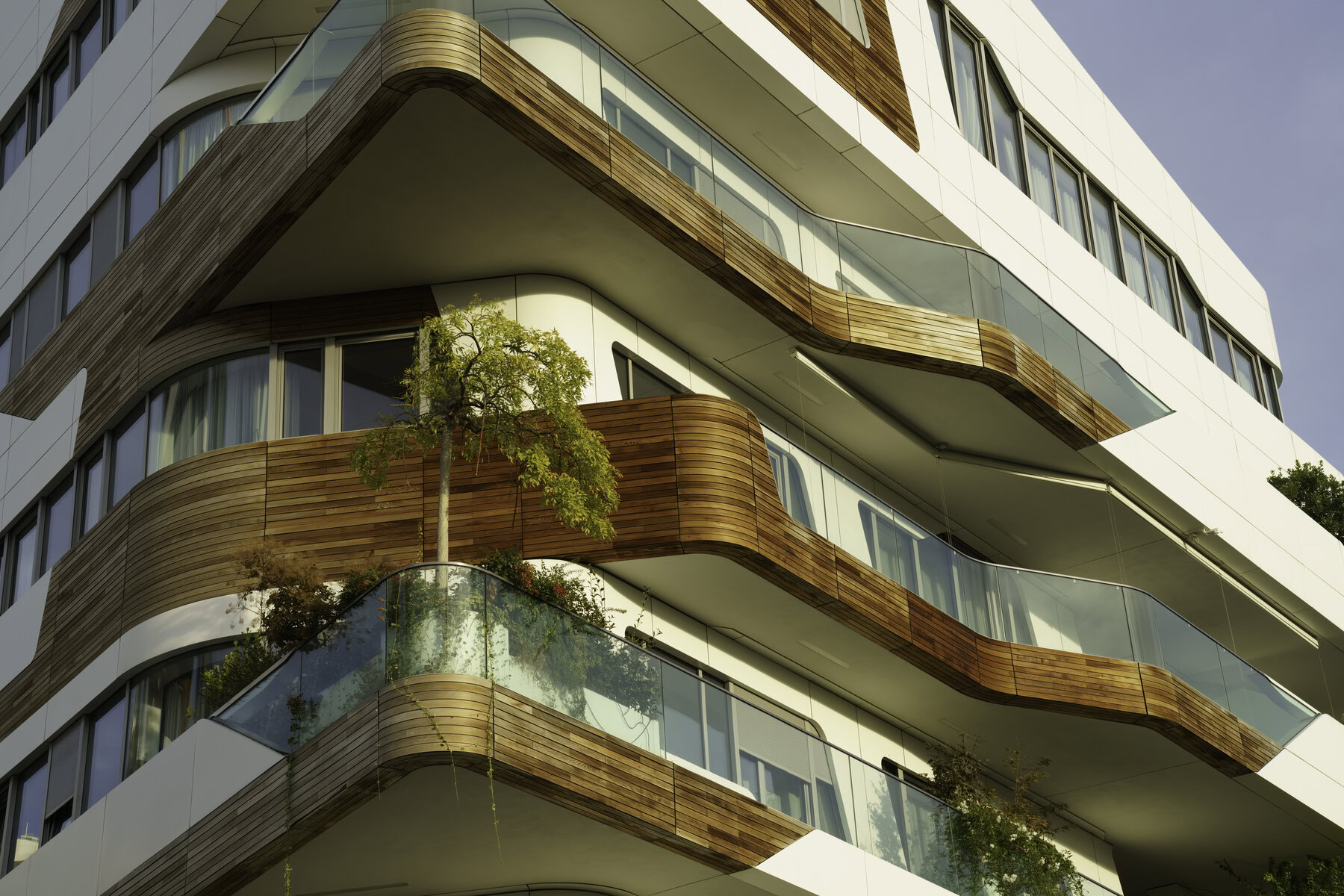
Architectural aluminum panel cladding represents the ultimate zero-maintenance solution for modern residential and commercial facades in coastal environments. Aluminum inherently resists marine atmospheric corrosion, unlike iron-based metals that oxidize rapidly when exposed to salt spray and high atmospheric moisture.
Finished with high-performance 70 percent polyvinylidene fluoride resin coatings, architectural metal panels retain gloss and resist chalking for over thirty years. Interlocking panel joints with hidden stainless steel clip systems allow for natural expansion and contraction without stressing the structural wall anchor points.
- Marine-grade aluminum alloys eliminate rust and structural oxidation in oceanfront settings.
- Advanced PVDF resin coatings resist intense ultraviolet degradation and salt spray corrosion.
- Light overall assembly weight minimizes dead load on foundation walls and cantilevered structures.
- Requires no surface recoating, requiring only an annual fresh water rinse to clear atmospheric salt deposits.
Engineered Stone and Breathable Masonry Veneers
Natural stone and engineered architectural masonry veneers offer superior durability, structural mass, and timeless aesthetic appeal for luxury residential and commercial exteriors. To prevent moisture entrapment within porous stone matrices, these systems require high-performance drainage planes and breathable mineral-based or potassium-silicate finish glazes.
Potassium-silicate finishes chemically bond with minerals in the masonry substrate rather than forming a plastic film over the surface. This chemical crystallization process leaves microscopic pores open, allowing moisture trapped inside the structure to evaporate freely while preventing external wind-driven rain from entering.
- Chemical mineral bonding ensures the exterior coating will never peel, blister, or flake off.
- Outstanding impact resistance exceeds all High-Velocity Hurricane Zone wind-borne debris requirements.
- Natural thermal mass helps stabilize interior building temperatures throughout hot summer days.
- Complete resistance to biological staining, decay, and environmental pollutant discoloration.
Field Case Studies: Resolving Complex Exterior Failures
Real-world experience in South Florida remodeling frequently presents unexpected failure modes caused by legacy construction techniques and aggressive environmental weathering. We have developed specialized field engineering protocols to resolve severe exterior envelope failures without compromising building aesthetics or project schedules.
Case 1: Remediation of Dynamic Stucco Cracking and Water Intrusion in Venetian Islands
During a major renovation of a waterfront estate on the Venetian Islands, we discovered severe water intrusion behind existing traditional three-coat stucco. The building envelope suffered from unaddressed structural settlement cracks at concrete floor slab transitions, allowing wind-driven saltwater to penetrate behind the stucco layer and corrode the wire lath backing.
We resolved this structural failure by completely removing the compromised stucco and installing a continuous fluid-applied air and water barrier over the masonry backup wall. We then installed pressure-treated horizontal furring strips to form a ventilated rainscreen cavity, over which we mounted high-density prefinished fiber cement panels using 316-grade stainless steel mechanical fasteners.
- Mechanically stripped failed stucco and wire lath down to structural concrete masonry units.
- Applied a 40-mil continuous rubberized fluid membrane over the masonry structural wall.
- Constructed an engineered vertical rainscreen ventilation space using engineered composite furring strips.
- Installed Notice of Acceptance approved fiber cement cladding with full marine-grade stainless fasteners.
This rainscreen assembly established a continuous drainage plane, allowing any water penetrating panel joints to drain freely down the membrane face without entering the interior structure. The estate owner gained a wind-impact-certified exterior that eliminated moisture intrusion while requiring zero structural painting for twenty years.
Case 2: Resolving Galvano-Corrosion on Modern Metal Facades in Coconut Grove
At a commercial design facility in Coconut Grove, we were brought in to address severe blistering, corrosion, and panel detachment on a six-year-old architectural metal wall cladding installation. Our forensic envelope inspection revealed that previous installers used standard galvanized carbon steel mounting brackets directly in contact with aluminum cladding panels in an ocean-facing environment.
This direct contact created aggressive galvanic corrosion, which destroyed the structural mounting clips and caused the finish on the exterior panels to delaminate. We remediated the structure by unmounting the existing metal wall array, inspecting the structural backing, and replacing all sub-framing with non-conductive, heavy-duty extruded aluminum girts.
We specified 0.040-inch thick marine-grade aluminum panels featuring a 70 percent PVDF coating certified under AAMA 2605 specifications. To prevent future galvanic reactions, we isolated every metal connection using engineered EPDM isolation gaskets and secured the entire assembly with 316-grade stainless steel fasteners. The facility now features a fully isolated, storm-resistant metallic facade capable of withstanding direct ocean spray without material breakdown.
Comprehensive Performance and Cost Comparison Matrix
Evaluating the long-term value of exterior finish systems requires analyzing upfront installation expenses alongside required maintenance cadences and overall service lifespans. The following matrix outlines financial and performance metrics for premier exterior finishes operating under High-Velocity Hurricane Zone conditions in Miami.
| Exterior Finish System | Installed Cost Range (per SF) | Expected System Lifespan | Maintenance Cadence | HVHZ Wind & Impact Rating | Salt Air & Coastal Resistance | Ideal Property Applications |
|---|---|---|---|---|---|---|
| Factory-Prefinished Fiber Cement | 9 to 16 US Dollars | 50+ Years | Low pressure rinse every 2-3 years | High (Notice of Acceptance Approved) | Excellent (Non-corrosive) | Waterfront estates, single-family homes, multi-family housing |
| Stucco with Elastomeric Coating | 7 to 13 US Dollars | 30 to 40 Years | Rinse every 2 years; recoat every 12-15 years | High (When bonded to CMU) | Good (Requires continuous elastic membrane) | Mediterranean homes, commercial plazas, civic buildings |
| Architectural PVDF Aluminum Panels | 18 to 34 US Dollars | 40 to 50+ Years | Annual freshwater spray rinse | High (Engineered hidden clip system) | Superior (Immune to rust) | Contemporary luxury homes, commercial headquarters |
| Engineered Masonry with Mineral Finish | 14 to 28 US Dollars | 50+ Years | Inspection and cleaning every 5 years | Superior (High structural density) | Superior (Chemical mineral bond) | Historic restorations, custom luxury facades |
| Architectural Polymeric Cladding | 5 to 10 US Dollars | 25 to 30 Years | Annual detergent wash | Moderate to High (Specific NOA assemblies) | Excellent (Synthetic composition) | Investment properties, low-rise commercial structures |
Remodeling Protocols for Miami Building Envelopes
Executing a successful exterior remodel in South Florida requires strict operational sequencing to guarantee code compliance and long-term durability. Skipping critical prep steps or selecting non-approved products jeopardizes structural safety and risks permit rejection during municipal inspections.
- Perform a structural masonry and substrate moisture audit using calibrated pinless moisture meters to identify hidden dampness.
- Verify that every exterior panel, fastener, house wrap, and flashing tape carries an active Miami-Dade Notice of Acceptance or state approval index number.
- Install a high-performance weather-resistive barrier over structural sheathing, integrating flexible self-adhering flashing tape around all window and door penetrations.
- Mount engineered furring strips to form a minimum three-eighths-inch continuous vertical rainscreen air cavity behind non-masonry claddings.
- Secure cladding panels according to the specific wind-load fastening schedule stamped in the product Notice of Acceptance engineering documentation.
- Seal all expansion joints and perimeter terminations using high-performance polyurethane or neutral-cure silicone elastomeric sealants.
Selecting thermal reflective light tones for wall finishes further enhances energy efficiency across South Florida properties. Insights published by the Florida Solar Energy Center demonstrate that solar-reflective light-colored exterior wall coatings substantially reduce solar heat absorption, directly lowering indoor cooling loads during peak summer heat.
Decision Framework for Home and Business Owners
Choosing the right exterior finish for your property depends on structural geometry, proximity to saltwater, project budget, and architectural preferences. If your property is situated within two miles of open saltwater, prioritize marine-grade aluminum paneling or factory-finished fiber cement installed over stainless steel sub-framing to eliminate metallic corrosion risks.
If you are renovating a Mediterranean or Spanish Colonial property where traditional aesthetics are required, specify a three-coat Portland cement stucco system topped with a 100 percent acrylic elastomeric membrane. For high-traffic commercial facades requiring modern visual impact with zero repainting requirements, architectural aluminum cladding provides the lowest total cost of ownership over a forty-year period.
Frequently Asked Questions
How often do exterior wall finishes require repainting in Miami?
Standard acrylic painted exterior walls in Miami require repainting every five to seven years due to intense UV degradation and atmospheric moisture. High-performance elastomeric coatings extend this interval to twelve to fifteen years, while factory-baked fiber cement and PVDF architectural metal panels can go thirty to fifty years without requiring any field repainting.
What makes an exterior cladding material High-Velocity Hurricane Zone compliant?
A cladding material achieves High-Velocity Hurricane Zone compliance by successfully passing standardized wind-borne debris impact testing, cyclic wind pressure loading, and water infiltration resistance tests. Products passing these tests receive a Miami-Dade County Notice of Acceptance or a Florida Product Approval explicitly rated for high-velocity zones, legally permitting their installation in South Florida.
Can flexible elastomeric coatings stop water leaks through exterior stucco?
Elastomeric coatings stop water intrusion through micro-fissures and hairline stucco cracks by forming a flexible, high-build rubberized membrane across the wall surface. However, elastomeric coatings cannot resolve active structural water leaks caused by missing wall flashing, unsealed window perimeters, or improper structural expansion joints.
How does ocean salt air affect exterior metal cladding systems?
Ocean salt air accelerates galvanic oxidation on ferrous metals like carbon steel, leading to rapid rusting, structural weakening, and surface coating delamination. Specifying marine-grade aluminum alloys or stainless steel fasteners coated in fluoropolymer PVDF finishes completely prevents salt-spray corrosion on coastal properties.
Why is a rainscreen air gap necessary behind exterior siding in South Florida?
A rainscreen air gap creates a continuous vertical ventilation space between the exterior cladding and the inner weather-resistive wall barrier. This air cavity breaks capillary action, allows wind-driven moisture to drain safely down the wall face, and accelerates drying through continuous convective air currents, preventing mold growth and framing decay.
Sources
- Florida Building Code 8th Edition (2023) Building, Chapter 14 Exterior Walls: https://codes.iccsafe.org/content/FBC2023P1
- Miami-Dade County Regulatory and Economic Resources Product Control Section: https://www.miamidade.gov/building/product-control.asp
- Florida Solar Energy Center Building Research Division: https://www.fsec.ucf.edu/