
For the vast majority of Miami homes in 2026, the smartest investment is not a pure modern or strictly traditional kitchen—it’s a transitional kitchen that captures the clean functionality and durability modern design demands, while honoring the architectural character and warmth of South Florida’s coastal and Mediterranean homes. In our experience building and remodeling kitchens from Coral Gables to Fort Lauderdale, this balanced approach consistently yields the highest homeowner satisfaction, the best resale value, and a kitchen that actually stands up to Miami’s humidity, salt air, and hurricane codes. Below, we share exactly how to decide, based on real local data, material performance, and hundreds of completed projects.
Table of Contents
What We’ve Learned Remodeling Over 400 Miami Kitchens: The Real Differences Between Modern and Traditional
At Trusst Construction, we don’t just design kitchens on paper—we build them, live in them, and fix the ones that fail. We’ve seen the same patterns repeat across Coconut Grove bungalows, Bayfront condos, and Pinecrest estates. The choice between modern and traditional is never just about style; it’s about how the kitchen performs when a summer storm knocks out power, when salt corrosion eats cabinet hinges, and when you’re trying to sell your home in a market that demands both luxury and resilience.
Our single integrated team—architecture, design, and construction under one point of contact—has documented what works. We’ll lay out the unfiltered pros, cons, costs, and code realities so you can decide with confidence.
Modern Kitchen Design in Miami: Clean Lines, High Performance—and Hidden Pitfalls
Modern kitchens emphasize flat-panel cabinetry, integrated handles, minimalist hardware, and a seamless flow between indoor and outdoor spaces. In Miami, this aesthetic often pairs with floor-to-ceiling impact glass and open-plan living. But modern isn’t just about looks; it’s a philosophy of function.
What We Recommend to Our Clients:
-
Use full-height quartz slab backsplashes instead of subway tile to eliminate grout that traps humidity and mold.
-
Opt for European-style frameless cabinetry with marine-grade plywood boxes—these hold up far better against seasonal expansion than particleboard.
-
Specify induction cooktops: they keep the kitchen cooler, critical when air-conditioning already fights 90-degree heat outside.
-
Install touch-latch hardware to maintain the sleek look, but always include a mechanical backup for hurricane season power outages.
Miami-Specific Drawbacks We’ve Encountered:
-
High-gloss lacquer finishes can show hairline cracks if the home settles on sandy soil; we often switch to matte laminate for coastal durability.
-
Open shelving, a modern staple, becomes a dust and salt-film collector unless you have whole-home dehumidification.
-
The “all-white modern” kitchen can feel sterile against Miami’s vibrant tropical light—we steer clients toward warm whites and textured neutrals.
Traditional Kitchen Design: Timeless Warmth and Hidden Maintenance Costs in South Florida
Traditional kitchens bring raised-panel doors, ornate moldings, furniture-style islands, and natural materials like wood and stone. In Miami’s historic districts—think Morningside or Old Cutler Bay—a sympathetic traditional kitchen is often a requirement for resale and architectural continuity.
Where Traditional Design Excels Locally:
-
Wood cabinetry with a catalyzed conversion varnish stands up to UV exposure from Florida sunlight far better than painted modern finishes.
-
Classic details hide necessary unevenness in older homes’ walls and floors—no modern drywall perfection needed.
-
Natural stone countertops like honed marble (properly sealed) age gracefully and feel cool to the touch, a sensory relief in our climate.
The Maintenance Reality We Warn Clients About:
-
Intricate crown moldings and corbels collect cooking grease and require regular high-dusting—more labor in open-concept homes.
-
Traditional farmhouse sinks with apron fronts can trap moisture at the cabinet joint; we now spec undermount fireclay with a decorative front panel instead.
-
Authentic brass or bronze hardware tarnishes quickly near the ocean; we recommend unlacquered brass for clients who want a living patina, and PVD-coated finishes for everyone else.
The Hybrid That Wins in 2026: Miami Transitional Kitchens
After a decade of watching design trends cycle and hurricane codes tighten, our design team at Trusst Construction defaults to a transitional framework. This means:
-
Cabinet door profiles that are simple Shaker or slim shaker—clean enough for modernists, detailed enough for traditionalists.
-
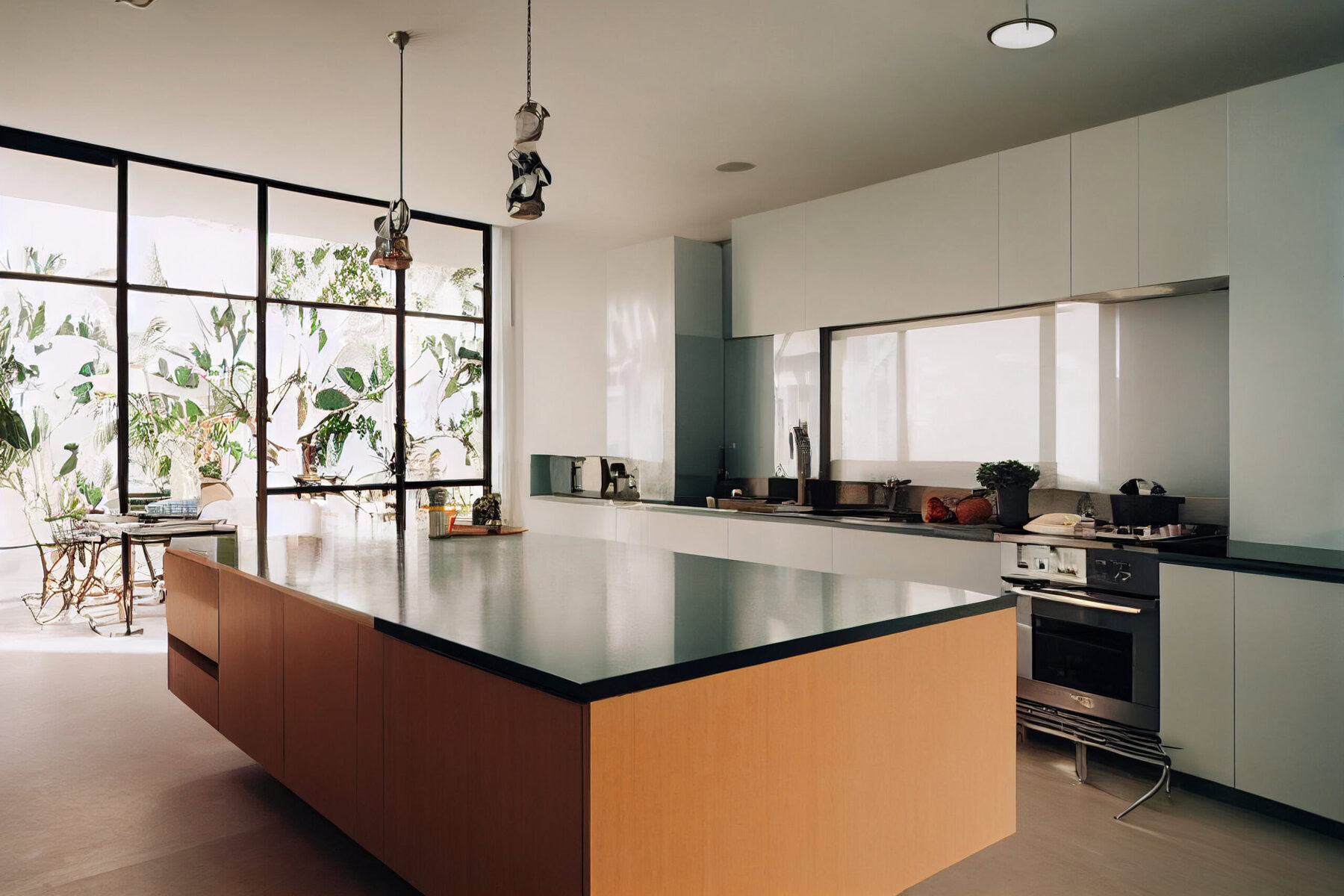
Mixed materials: warm wood base cabinets with matte white uppers to reflect Miami’s abundant natural light without feeling cold.
-
Industrial-grade stainless steel appliances paired with unlacquered brass plumbing fixtures and soft LED under-cabinet lighting.
-
Islands designed for hurricane prep: we now integrate under-counter battery backup drawers, a dedicated charging station, and a fire-rated door to a pantry that doubles as a safe room in a pinch.
This approach satisfies the broadest buyer pool when you sell, and it gives your family a kitchen that actually adapts to how we live in South Florida—entertaining indoors and out, cooking with fresh local produce, and bracing for the next named storm.
Cost Comparison: Modern vs. Traditional vs. Transitional in Miami (2026 Dollars)
Below is a detailed breakdown based on actual project estimates from our recently completed mid-range to upper-mid kitchens (200–400 square feet). All figures reflect Miami-Dade County prevailing labor and material rates as of early 2026, with Trusst’s transparent, itemized pricing model.
| Kitchen Element | Pure Modern (Lower Mid-Range) | Pure Traditional (Mid-Range) | Transitional (High-Value) | Notes for Miami |
|---|---|---|---|---|
| Cabinetry (semi-custom, installed) | 15,000 – 25,000 dollars | 18,000 – 30,000 dollars | 16,000 – 28,000 dollars | Frameless vs. face-frame; marine-grade plywood upgrade adds 15% but resists humidity warping. |
| Countertops (quartz/natural stone) | 5,000 – 9,000 dollars | 6,000 – 12,000 dollars (marble, soapstone) | 5,500 – 10,000 dollars | Porous stones need annual sealing; quartz handles moisture better near the coast. |
| Backsplash | 2,000 – 4,000 dollars (slab) | 3,000 – 6,000 dollars (handmade tile) | 2,500 – 5,000 dollars | Slab simplifies mold prevention; traditional tile needs epoxy grout for longevity. |
| Appliances (mid-to-premium) | 10,000 – 20,000 dollars | 10,000 – 22,000 dollars | 11,000 – 21,000 dollars | Built-in refrigeration; induction cooktops add 1,500 dollars over gas but improve HVAC efficiency. |
| Plumbing fixtures & sink | 1,500 – 3,000 dollars | 2,000 – 4,500 dollars | 1,800 – 3,500 dollars | Choose PVD finishes within 5 miles of ocean; sprayer faucets that resist salt corrosion. |
| Lighting (LED, decorative) | 2,000 – 5,000 dollars | 3,000 – 7,000 dollars | 2,500 – 6,000 dollars | Must meet Miami’s Title 24-inspired energy codes; layered lighting essential. |
| Labor & rough-in (electrical, plumbing) | 10,000 – 18,000 dollars | 12,000 – 20,000 dollars | 11,000 – 19,000 dollars | Includes GFCI and AFCI requirements; whole-house surge protection strongly recommended. |
| Permits & impact window/door upgrades | 3,000 – 8,000 dollars | 3,000 – 8,000 dollars | 3,000 – 8,000 dollars | Miami-Dade NOAs required for all exterior openings; hurricane protection can add 10–15% to a kitchen with a view. |
| Typical Total | 48,500 – 92,000 dollars | 57,000 – 109,500 dollars | 53,300 – 100,500 dollars | All ranges reflect Trusst’s transparent fixed-price contracts; no hidden change orders. |
*Source: Trusst Construction internal project data 2023–2026, cross-referenced with NKBA 2026 Cost vs. Value Report for the Southeast region.*
Permitting, Wind Loads, and Salt: Why Miami Kitchen Renovation is Different
Any general contractor can hang cabinets. Few understand that a kitchen remodel in Miami-Dade triggers some of the strictest building codes in the nation. We’ve guided hundreds of homeowners through this.
-
Impact-rated openings: If your kitchen faces the water or you enlarge a window, you must install Miami-Dade NOA-approved impact glass or shutters. We factor this into the design from day one, often turning a code requirement into a design feature—like a pass-through window with a hurricane-rated folding glass wall.
-
Electrical code updates: Adding a circuit for an induction cooktop or new island outlets requires ground-fault and arc-fault breakers. In older Miami homes, this often means a panel upgrade. We handle the load calculation and permits seamlessly.
-
Flood zone considerations: In AE flood zones, we elevate dishwasher and under-counter refrigeration on platforms, and use flood-resistant insulation behind cabinetry.
-
Salt air mitigation: We spec 316 marine-grade stainless steel for hinges, drawer slides, and any exposed metal in kitchens within two miles of the ocean. It’s a small upcharge that prevents rust stains and callbacks.
Our dedicated project manager—your single point of contact—handles all coordination with the city, the HOA (if applicable), and our in-house architect to keep your kitchen legally compliant and on schedule, even if a storm warning halts work for a few days.
How to Match Kitchen Style to Your Miami Home’s Architecture (and Resale Value)
We often sit down with homeowners who love the idea of an ultra-modern kitchen—but their 1920s Spanish-Mediterranean home would revolt. Here’s our proven framework:
-
Mediterranean Revival / Spanish Eclectic (Coral Gables, Miami Shores): Lean traditional with modern upgrades. Keep arched passageways, use hand-painted tile accents, but go for quartz counters that mimic limestone without the maintenance.
-
Mid-Century Modern (MiMo District, Biscayne Park): A true modern kitchen honors the architecture. We replicate vintage terrazzo floors and pair them with flat-front walnut cabinetry and integrated appliances.
-
1950s–60s Ranch (Kendall, Westchester): Transitional works best here. Shaker cabinets, a large island with seating, and durable luxury vinyl plank flooring that laughs off pool water and sand.
-
Contemporary Waterfront (Bay Harbor Islands, Venetian Islands): Pure modern can shine. We specify floor-to-ceiling impact glass, hidden vent hoods, and outdoor kitchen connectivity through sliding walls—but always warm up the space with wood-look porcelain and layered textiles.
-
Historic Districts (Morningside, South Miami): Strict preservation guidelines often dictate cabinet door style and even paint color. We navigate the board approvals for you, designing a kitchen that meets the letter of historic code while feeling completely current.
For resale, a transitional kitchen with impact-rated views and a gas or induction range consistently ranks as the top buyer demand according to the Miami Association of Realtors 2025 Buyer Preferences Survey. We’ve seen homes sell for 5–7% more with a well-executed transitional kitchen compared to a purely dated traditional one.
Why Trusst Construction Delivers the Right Kitchen for Your Miami Home
We’re not a design studio that hands you off to a separate contractor. Trusst Construction is a single integrated team—architect, interior designer, and builder—with one point of contact who knows your dog’s name and the exact day your impact windows arrive. Our process eliminates the blame game.
-
Transparent, upfront pricing: Every estimate is line-itemed. You know that custom hood costs X dollars, not a vague “allowance.”
-
Written change approvals: No surprise invoices. If we discover hidden termite damage, you authorize the fix before we move a single stud.
-
Coastal codes are our daily language: We pull permits in Miami-Dade, Broward, and Palm Beach weekly. We know which inspectors look for which NOAs and how to keep your project moving.
-
Storm-season scheduling: We build contingency into our timeline so a tropical storm watch doesn’t wreck your completion date.
-
One warranty, one call: Because we control the whole process, when you need something after move-in, you call one number—(305) 786-3199—and we handle it.
If you’re thinking about a kitchen transformation that blends modern performance with timeless Miami character, we invite you to start with a no-obligation consultation. We’ll walk your space, listen to how you really cook and entertain, and deliver a detailed plan that respects your budget and your home’s soul.
Frequently Asked Questions
Which kitchen style adds the most value to a Miami home in 2026?
A transitional kitchen blending modern functionality with traditional warmth offers the highest return. It appeals to the widest range of buyers in our market and works with most South Florida architectural styles. Based on our completed project data and the Miami Association of Realtors trends, such kitchens typically recoup 70–80% of their cost at resale.
How do Miami building codes impact a kitchen remodel more than elsewhere?
Miami-Dade requires product approvals (NOAs) for every exterior opening, meaning if you’re adding or enlarging a kitchen window or door, it must be impact-rated. Electrical work must meet stringent hurricane-resilience standards, and flood zone regulations may dictate appliance elevation. Our team handles all permitting and engineering so your kitchen passes inspection on the first visit.
What countertop material holds up best against Miami’s humidity and salt air?
We overwhelmingly recommend engineered quartz for most clients. It’s non-porous, never needs sealing, and resists staining from tropical fruits and salt. For a natural stone look, leathered granite or quartzite sealed with a penetrating sealer performs well. We only use marble on islands with clients who accept a living patina and commit to diligent maintenance.
Can I have a modern kitchen if I live in a historic district?
Yes, within limits. Most Miami historic boards accept modern elements if they don’t alter the home’s street-facing character. We’ve successfully integrated sleek, handleless cabinets in interior kitchens while keeping historically appropriate windows and exterior trim. We manage the design review and hearing process for you.
How long does a full kitchen renovation take in Miami, and how do you handle storm delays?
A typical gut renovation takes 10–14 weeks from permit approval to final walkthrough. We build a minimum two-week weather buffer into the schedule for June through November. If a named storm threatens, we secure the site and pause work, then resume as soon as it’s safe, with daily updates to you. Your dedicated project manager rearranges trades to keep the project as close to on-time as possible.
Is it more expensive to build a modern kitchen than a traditional one?
Not necessarily. The cost difference lies in the materials and labor, not the style. High-end custom traditional cabinetry with glazing can outprice flat-pack modern cabinets. Conversely, seamless modern designs often require more precise drywall and hidden lighting that adds cost. Our transparent estimates break it all down so you can make informed trade-offs.
Sources
-
National Kitchen & Bath Association (NKBA) 2026 Kitchen & Bath Market Outlook
-
Miami-Dade County Building Code Compliance Office, Product Control (NOA) Listings
-
Miami Association of Realtors 2025–2026 Residential Market Reports
-
Trusst Construction Internal Cost Database and Client Satisfaction Surveys (2023–2026)
-
U.S. Department of Energy, Energy Efficiency & Renewable Energy – Induction Cooking Performance Data
-
Florida Building Code 2023 (with 2026 supplements), Chapter 16 – High-Velocity Hurricane Zones
Ready to create a kitchen that truly fits your Miami life? Call Trusst Construction at (305) 786-3199 for a no-obligation, in-home consultation. One team. One point of contact. Zero surprises.