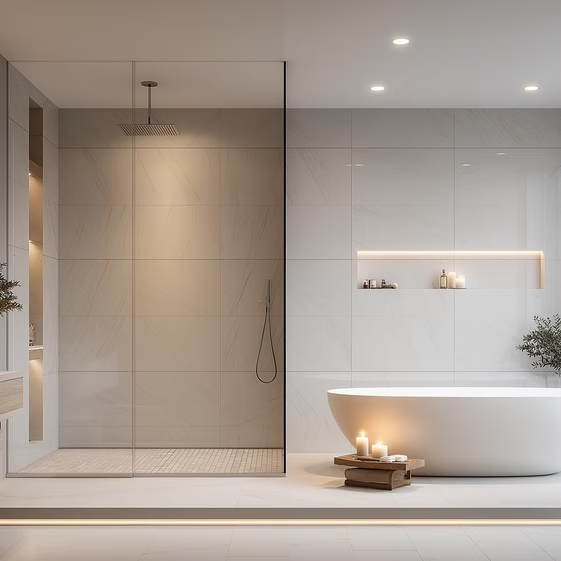

Attention to the little details (hardware, grout, trim) really stood out during my bathroom remodel. Project stayed organized and they cleaned up properly every evening. Recommend them without reservation.


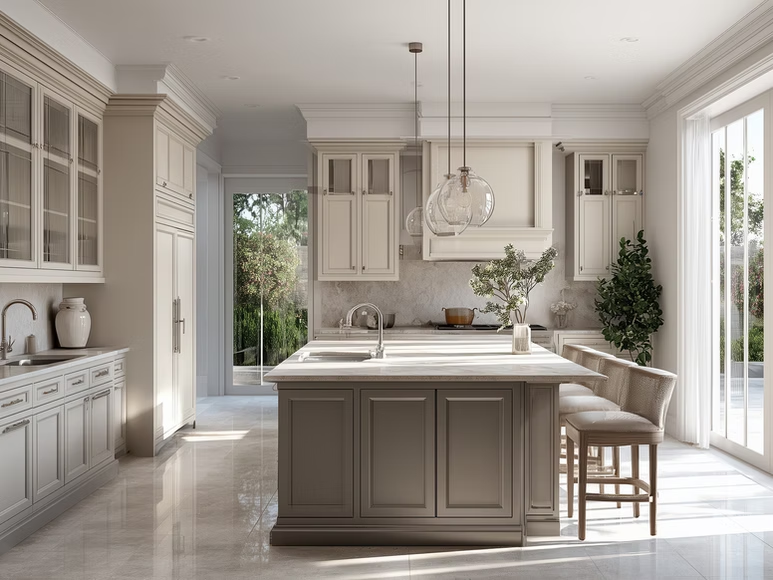
We needed a kitchen update and a complete bathroom renovation in a smaller home. They maximized the space without making it feel crowded. Cabinets, counters, and tile all look custom. Comm was clear from start to finish and there were no last-minute extras.

Craftsmanship, communication, and cleanliness were all better than previous contractors we’ve used. Finished on time and exactly as quoted. Already planning the next project with them.

Exellent Work, Very good Company.
Exellent Management from Shay and Gili.
Thank you very much for everything.
I would take this Company again and again.

We renovated our summer house with Trusst, the process was seamless, the team is highly professional and showed up to work every single day. Finishes were top of the line and we are very satisfied

We recently hired Trusst Construction to remodel our bathroom and they did an incredible job. The quality of the work was outstanding and every detail was done with care. The team was professional, communicative, and reliable throughout the entire project.
With two babies under two, keeping our home clean during construction was a huge priority. They did an amazing job containing the mess and keeping everything as clean as possible.
Like any renovation, there were a few hiccups, but what set them apart was how professionally they handled them. Gil was great to work with, always in touch with us, and helped us choose the fixtures, vanity, and tile to make sure everything worked well together in our space.
I would absolutely recommend them and wouldn't hesitate to work with them again.

So we had these guys renovate our basement and turns out we should have done this earlier. I am glad my experience with them was good. Small delays on some days but overall it was a project well executed. I will definitely use them if I ever need my ADU coberated

Trusst Construction was great to deal with. My bathroom looks great and I would highly recommend them. They were on time and took the most minimum time to arive. The price was fair, thanks guys.

Used Trusst Construction for our bathroom reno and honestly couldn’t be happier. Showed up on time, communicated well throughout, and the work speaks for itself — tile, fixtures, everything looks clean and done right. No surprises, no delays, just solid work from start to finish. Would use them again in a heartbeat.
Trusst Construction was great to deal with. My bathroom looks great and I would highly recommend them. They were on time and took the most minimum time to arive. The price was fair, thanks guys.