You see it all the time in Ojus. A family buys a beautiful two-story house, maybe five years old, and within months they’re already planning a bathroom remodel because the shower has a three-inch step-up, and the hallway door is too narrow for a wheelchair they don’t even need yet. Nobody plans to age. Nobody plans for a broken leg. Nobody plans for a friend who uses a walker to visit for Thanksgiving.
But the house doesn’t care about plans. It just exists, built to the minimum code, and the minimum code has never asked whether the home actually works for humans over time.
Architectural universal design isn’t a trend or a checklist. It’s a way of building that acknowledges reality: bodies change, families change, and the house you build today will probably outlive the person who built it. In a place like Ojus, where the housing stock ranges from mid-century ranches to new Mediterranean-style builds, the disconnect between how homes are designed and how people actually live is getting harder to ignore.
Key Takeaways
- Universal design isn’t just for aging homeowners or people with disabilities—it benefits everyone who lives in or visits the home.
- The most common mistakes involve doors, thresholds, and bathrooms, which are expensive to fix later.
- Retrofitting an existing home is possible, but it costs more than building it right from the start.
- In South Florida, humidity and storm regulations add layers of complexity that many contractors ignore.
- You don’t have to sacrifice aesthetics. Good universal design looks like a regular well-designed home.
Table of Contents
The Real Problem With Most New Construction
Walk through any new development in Ojus and you’ll notice the same pattern: narrow hallways, tight corners, and bathrooms that look beautiful but function poorly for anyone who isn’t standing upright with full mobility. The issue isn’t malice. It’s that most builders follow the Florida Building Code, which sets a floor, not a ceiling. The code says a door must be at least 32 inches wide in certain rooms. That’s the minimum. But a 32-inch door with a standard frame leaves you with about 29 inches of clear opening, which is barely enough for a standard wheelchair.
We’ve seen this play out dozens of times. A homeowner in Ojus calls us after a parent moves in following a hip replacement. They need to widen the bathroom door. That means cutting into a load-bearing wall, moving plumbing, and patching tile. It’s a week-long project that costs thousands. If the house had been built with a 36-inch door and a zero-threshold shower, the cost at construction would have been maybe two hundred dollars more.
The math doesn’t lie. Building for real human use from day one is cheaper than fixing it later. But the industry doesn’t incentivize that because the person paying for construction isn’t always the person who will live there long-term.
What Universal Design Actually Looks Like in a Home
Let’s be clear: universal design doesn’t mean grab bars everywhere and hospital-grade flooring. That’s a common misconception. Real universal design is subtle. It’s a lever-style door handle instead of a knob. It’s a light switch placed at 42 inches instead of 48. It’s a curbless shower with a slight slope to the drain, which also happens to be easier to clean.
The core idea is that the home should work for a 6-year-old, a 40-year-old, and an 80-year-old without anyone feeling like the house was designed for them specifically. That’s harder than it sounds because most of us have internalized the idea that homes are built for a hypothetical “average” person. That average person doesn’t exist.
In practice, we focus on three areas that cause the most friction: entry points, bathrooms, and kitchens.
Entry Points
The front door is the first test. If there’s a step, even one, you’ve already created a barrier. A zero-step entry is possible with proper grading and a covered landing. It doesn’t look weird. It just looks like a well-designed entrance. The same goes for the garage-to-house transition. We see so many homes in Ojus where the garage has a step up into the house, which makes unloading groceries annoying and becomes a real problem if someone uses a walker.
Bathrooms
This is where most of our retrofit calls come from. A standard bathroom in a new home might have a 30-inch door, a tub with a 15-inch step-over, and a toilet placed in a corner where you can’t transfer from a wheelchair. Fixing that later means demolition. In a new build, the solution is simple: 36-inch door, curbless shower with linear drain, blocking in the walls for future grab bars, and a toilet with at least 18 inches of clearance on one side. The blocking costs maybe fifty dollars in lumber. Not installing it is a false economy.
Kitchens
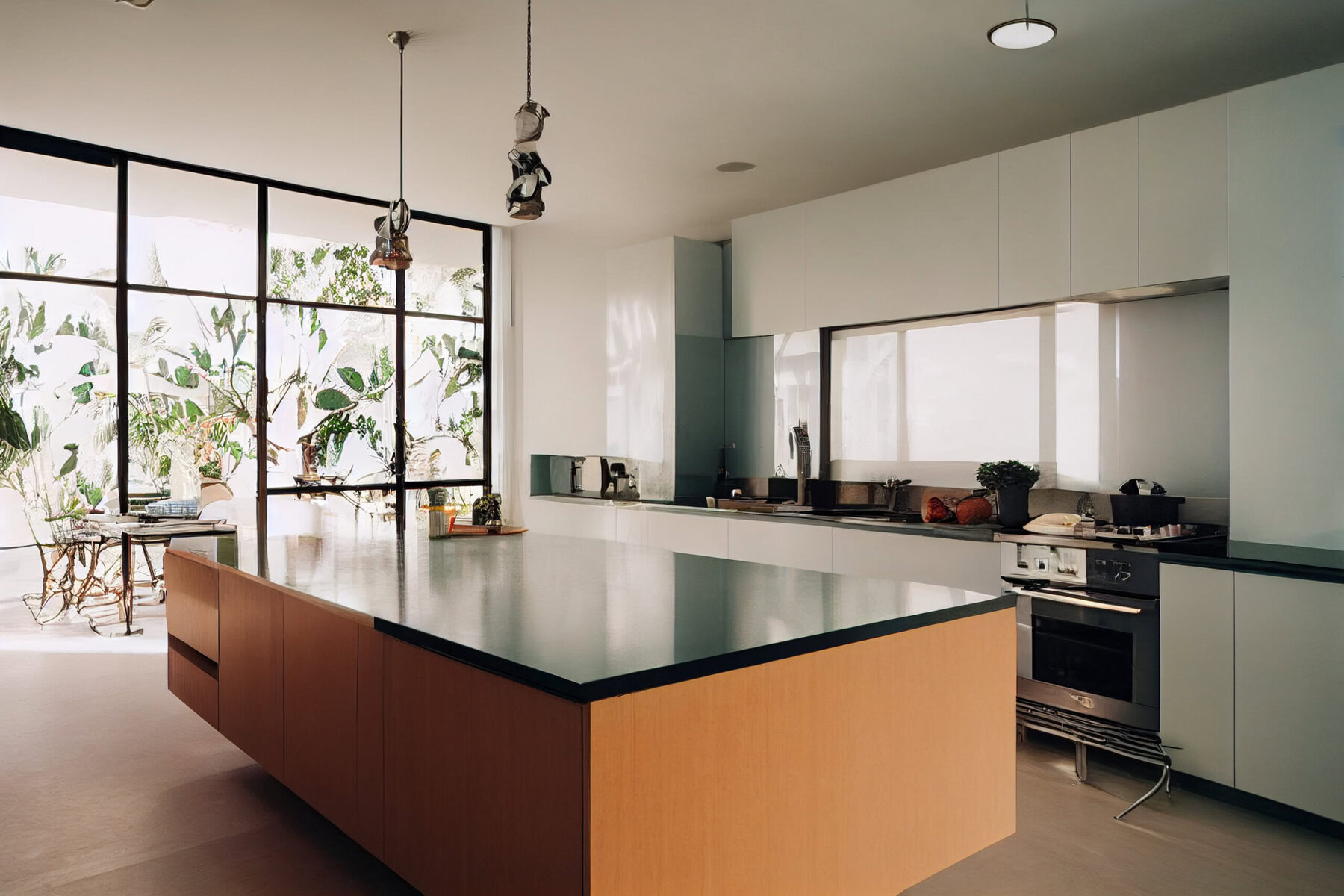
Kitchens are tricky because the counter height that works for someone in a wheelchair doesn’t work for someone standing. The compromise is a multi-height island or pull-out cutting boards. We also recommend drawer-style dishwashers and pull-out shelving in base cabinets. These aren’t specialty items anymore. You can buy them at any big-box store. The cost difference is negligible.
The South Florida Factor
Building in Ojus means dealing with things that other parts of the country don’t worry about. High humidity, hurricane-force winds, and termites all affect how you design a home. Universal design has to work within those constraints, not against them.
For example, a zero-threshold shower sounds great until you realize that in a storm surge zone, you might want a slight lip to keep water out. The solution is a trench drain and proper slope, which requires a contractor who understands hydraulics, not just tile installation. We’ve seen houses where the contractor just sloped the floor toward the drain without accounting for the fact that the entire slab might shift over time. That’s a recipe for standing water.
Also, let’s talk about impact windows and doors. In Ojus, most new construction requires impact-rated openings. That’s fine. But the frames are often thicker, which can eat into clear opening width. If you spec a 36-inch door, the actual clear opening might be 33 inches after the frame and hardware. That’s still fine for a wheelchair, but barely. We recommend going with 38-inch doors in key areas to give yourself breathing room.
Common Mistakes We See Repeatedly
After doing this work for years, certain patterns emerge. Here are the ones that frustrate us the most because they’re so avoidable.
Light switches placed behind doors. This happens constantly. The door swings open and covers the switch. That’s a problem for anyone, but especially for someone with limited reach. The fix is to think about door swing direction during framing.
Toilets placed too close to the wall. The code says 15 inches from center to the nearest obstruction. That’s barely enough. We recommend 18 inches. It doesn’t cost more. It just requires a different rough-in.
No blocking in bathroom walls. This is the one that kills us. For maybe fifty dollars of wood, you can install blocking between studs so that grab bars can be added later without tearing open the wall. Almost no production builders do this. It’s pure short-term thinking.
Thresholds that are too high. Even a half-inch threshold can trip someone. We use flush thresholds with a beveled edge. They look clean and they don’t catch a cane or a walker.
Cabinets that don’t have pull-out shelves. Deep cabinets are a nightmare for anyone. Pull-out shelves cost maybe fifty dollars more per cabinet. They make life easier for everyone.
When Universal Design Doesn’t Fit
Not every home needs full universal design, and pretending otherwise would be dishonest. If you’re building a vacation rental that will be rented to young groups for weekend trips, the return on investment for a curbless shower might not make sense. If you’re on a tight budget and the house is in a flood zone where you’ll need to elevate, a zero-step entry might be impossible without significant grading work.
Also, some people just don’t like the look. We’ve had clients say they don’t want “handicap-accessible” features because they think it makes the house feel institutional. That’s a valid concern, even if we think it’s based on a misunderstanding. The reality is that well-designed universal features don’t look medical. They look like a modern home. But if the client is paying, the client decides.
The trade-off is that the house will be less functional over time. That’s a choice. We just want people to make it with open eyes.
A Practical Table for Decision-Making
Here’s a rough guide we use with clients in Ojus to decide which universal design features to prioritize based on budget and timeline.
| Feature | New Construction Cost | Retrofit Cost | Priority Level |
|---|---|---|---|
| 36-inch doors (clear opening) | Minimal ($50–$100 per door) | High ($500–$1,500 per door, plus wall repair) | High |
| Zero-threshold shower | $200–$400 extra for linear drain | $3,000–$8,000 depending on plumbing | High |
| Blocking in bathroom walls | $50–$100 | N/A (install during build) | High |
| Lever-style door handles | $20–$50 per handle | $20–$50 per handle | Medium |
| Pull-out cabinet shelves | $50–$100 per cabinet | $150–$300 per cabinet | Medium |
| Multi-height kitchen island | $500–$1,000 | Not practical | Low |
| Wider hallways (42+ inches) | Depends on floor plan | Structural, often not feasible | Medium |
The pattern is obvious. If you’re building new, the cost difference is trivial. If you’re retrofitting, you’re paying for demolition, labor, and materials that could have been avoided.
When to Call a Professional
Some things you can DIY. Changing door handles, installing pull-out shelves, and adding grab bars (if you have blocking) are all doable. But anything involving structural changes, plumbing, or electrical should be handled by someone who understands both universal design and local codes.
In Ojus, that means working with a contractor who knows the Miami-Dade building department’s requirements for wind mitigation and flood elevation. We’ve seen homeowners try to DIY a curbless shower only to find out they violated the slope requirements for the drain, which led to water pooling and eventually mold. That’s not a cheap fix.
If you’re planning a major renovation or new build, talk to someone early. The worst time to think about door width is after the framing is done. The best time is before the slab is poured.
The Bottom Line
Universal design isn’t about preparing for disaster. It’s about building a home that works for the people who actually live in it, today and tomorrow. In Ojus, where the housing market is competitive and families often stay in their homes for decades, it makes practical and financial sense.
We’ve seen too many homes that look great in photos but fail the real-world test of daily life. A house that works for a 40-year-old couple with no kids might be a nightmare for the same couple twenty years later. Building with universal design principles doesn’t mean sacrificing style. It means making choices that keep the home functional for everyone, including the in-laws who visit, the neighbor who uses a walker, and the future version of yourself who might not move as well as you do now.
If you’re planning a project in Ojus, take the time to think about how the house will be used, not just how it will look. The extra hundred dollars you spend on wider doors today will save you thousands later. And it might save someone a fall.
For homeowners in Ojus looking to integrate universal design into a new build or renovation, understanding the core principles of universal design is a good starting point. From there, working with a local contractor like Trusst Construction located in Miami can help translate those principles into something that works for your specific lot, budget, and lifestyle.
Related Articles
The Role Of 3D Rendering In The Design Process
Designing For Wellness In Your Miami Home
Designing A Functional And Beautiful Home Office
Maximizing Your Design Build Contractor Consultation in Coral Gables
People Also Ask
Yes, there are several free home design websites that let you create 2D and 3D floor plans without any upfront cost. Platforms like Planner 5D, Sweet Home 3D, and Floorplanner offer generous free tiers, allowing you to experiment with layouts, furniture, and finishes. These tools are excellent for initial brainstorming and visualizing spatial flow. However, keep in mind that free versions often limit advanced features, such as high-resolution exports or photorealistic rendering. For a professional build, it is wise to use these tools for concept development, then consult a licensed contractor. At Trusst Construction, we often review these digital drafts to help clients refine their vision before we move into structural planning and permitting.
The 3-5-7 rule is a styling guideline used to create visually balanced arrangements, primarily for shelves, mantels, and tabletops. The principle suggests grouping decorative objects in odd numbers, specifically three, five, or seven items. Odd numbers are favored because they prevent the eye from pairing items symmetrically, which encourages a more organic and dynamic flow. To apply it effectively, vary the height, texture, and color of the objects within the group. For example, combine a tall vase, a medium stack of books, and a small sculptural piece. When working with larger spaces, like a long console, you can expand the grouping to five or seven items, ensuring the arrangement feels cohesive rather than cluttered. At Trusst Construction, we often recommend this rule to clients during interior renovations to achieve a professionally curated look without the need for a designer.
Designing your own home for free is an exciting first step, and it is achievable with the right approach. Start by using free, user-friendly 3D modeling software like SketchUp Free, Planner 5D, or Sweet Home 3D. These tools allow you to draw floor plans, experiment with wall placements, and visualize spaces in 3D without any cost. Begin by measuring your existing space or a building lot, then sketch a rough bubble diagram of your must-have rooms. Focus on the flow between the kitchen, living, and dining areas. While these tools are powerful, they cannot replace the structural expertise of a professional. For a project in Miami, Miami Beach, or Hialeah, Trusst Construction recommends using your free design as a conceptual guide, then consulting a licensed architect or engineer to ensure your vision is safe, compliant with local codes, and buildable. This hybrid approach saves money while protecting your investment.
Yes, there are several excellent apps for designing your house, ranging from simple 2D floor planners to advanced 3D modeling tools. Popular options include SketchUp, HomeByMe, and Planner 5D, which offer user-friendly interfaces for creating layouts, placing furniture, and visualizing finishes. For more professional results, consider using software like Chief Architect or AutoCAD, though these have steeper learning curves. While these apps are great for brainstorming and spatial planning, they cannot replace the expertise of a licensed professional for structural engineering and building code compliance. At Trusst Construction, we often use these tools to help clients visualize concepts, but we always rely on our in-house team to refine the design for safety and permit approval in Miami, Miami Beach, and Hialeah.
For homeowners in Miami, Miami Beach, and Hialeah, exploring 3D home design online for free is an excellent first step before committing to a renovation. Tools like Planner 5D, SketchUp Free, and HomeByMe offer intuitive drag-and-drop interfaces that let you create floor plans, experiment with furniture layouts, and visualize materials in real-time. These platforms are perfect for testing spatial flow and color schemes without any cost. However, while these tools are great for conceptualizing, they lack the engineering precision required for structural changes. When you are ready to move from a digital concept to a buildable reality, Trusst Construction can translate your 3D vision into accurate, permit-ready plans tailored to local codes.