
Table of Contents
Why Mixed‑Use Development Is Booming in Miami—and Why It Will Only Accelerate in 2026
We are witnessing a structural shift in how Miami grows. Sprawl has given way to vertical density where people live, work, shop, and dine within a single walkable footprint. This model aligns with what the Miami Downtown Development Authority forecasts as sustained demand for transit‑oriented, amenity‑rich communities. The 2025 Miami‑Dade County Market Overview from the Urban Land Institute noted that pedestrian‑friendly, mixed‑use projects consistently outperform single‑use buildings in lease‑up speed and rent premiums, often commanding 12–18% higher residential rents per square foot when ground‑floor retail is curated to serve the neighborhood.
Driving this surge are several intersecting forces that will remain intact throughout 2026:
-
Net in‑migration of high‑earning households and remote‑knowledge workers seeking a live‑work‑play lifestyle close to transit and green space
-
Municipal zoning updates in Wynwood, Little Havana, Allapattah, and South Dade that explicitly incentivize mixed‑use density through floor‑area‑ratio bonuses and reduced parking minimums
-
Retail’s transformation into experiential, service‑based and food‑hall concepts that thrive on an in‑house residential customer base
-
Miami’s “15‑minute city” push: city planners are prioritizing developments where daily needs are met within a short walk, exactly the promise of a well‑programmed mixed‑use building
Competitor articles often stop at market statistics, but we live these realities on the jobsite. Our design team has integrated Miami‑specific zoning overlays—such as the NCD‑2 districts—directly into early feasibility studies so our clients avoid wasted architectural fees on unbuildable program ideas. We know that a mixed‑use lot in Little River with a T5‑O transect zone can carry a far different return profile than one in Edgewater if you misjudge allowable live‑work unit ratios. That granular knowledge, built from decades of local work, is what separates a financially sound project from a protracted land‑use battle.
The Unique Miami Advantage: Demographics, Density, and Resilience
What makes Miami unlike any other U.S. market for mixed‑use is the marriage of coastal beauty and relentless climate demands. Our aging population is complemented by a wave of younger entrepreneurs and tech workers from New York, California, and Latin America who expect turn‑key urban living. Data from the Miami Association of Realtors shows that condo and rental demand in buildings with ground‑floor retail remained remarkably resilient through 2025 interest‑rate headwinds, while purely residential projects saw longer absorption.
At the same time, Miami‑Dade’s coastal high‑velocity hurricane zone (HVHZ) imposes strict building envelope, impact‑resistant glazing, and elevation requirements that can derail a budget if not factored in from day one. We have learned that the most profitable mixed‑use projects treat resilience not as a cost line but as a design driver. For example, we routinely elevate ground‑floor commercial spaces above the Design Flood Elevation (DFE) with architecturally integrated steps and terraces that become outdoor café seating—turning a FEMA mandate into leasable ambiance.
Deep Local Construction Challenges—and How We Solved Them
Many out‑of‑town developers come to Miami with beautiful renderings and a national contractor, only to hit a wall of permit corrections, wind‑load rejections, and material‑delivery delays tied to tropical weather windows. Our integrated approach avoids these gaps because architecture, structural engineering, and site operations all sit within one team that has navigated Florida Building Code 8th Edition (2023) long enough to anticipate what a plan reviewer in Coral Gables, Miami Beach, or unincorporated Dade will flag.
-
Permitting pitfalls: We front‑load civil and MEP coordination so that utility easements, Miami‑Dade DERM tree permits, and Water and Sewer Department new‑tap approvals move in parallel rather than sequentially.
-
Hurricane‑season logistics: We schedule foundations and vertical concrete between November and May to minimize weather shutdowns, and we pre‑order long‑lead items such as impact windows and generators during the off‑cycle.
-
Cost certainty: Because we provide clearly itemized estimates and written change approvals, clients never face a surprise allowance gap. Our design team value‑engineers wall assemblies and structural grids early—avoiding the costly redesigns that competitor articles rarely address.
Competitor content tends to gloss over these execution realities. We fill that gap with lived experience. In a recent 18‑unit mixed‑use building in Allapattah, we saved the owner over 340,000 dollars in structural steel costs by reorienting the retail bay grid to align with standard bar‑joist spans, a decision made possible only because our structural engineer and architect shared the same Revit model and the same Monday morning stand‑up.
The Trusst Construction Advantage: Single‑Source Design, Architecture, and Building
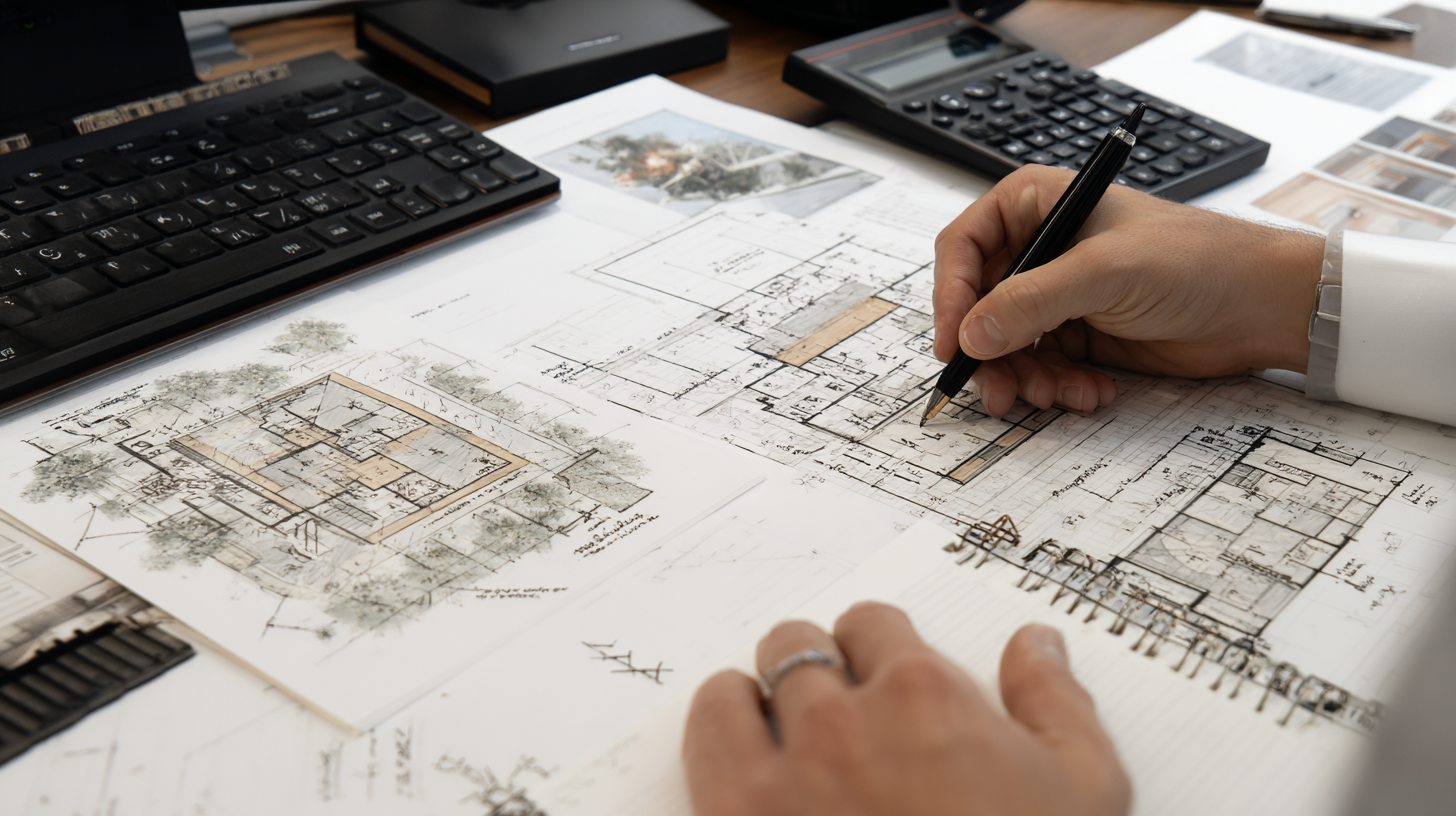
This is the core benefit our clients tell us they can no longer live without. In a conventional delivery model, an owner hires an architect, then bids the plans to general contractors, only to discover that the beautiful lobby ceiling is 14 feet above the allowed mechanical clearance. With Trusst, architecture, interior design, and construction reside under one agreement, one timeline, and one dedicated point of contact. That person manages all trades, schedules, and progress updates, and communicates with the owner in plain language, not change‑order riddles.
-
Transparent upfront pricing: Our estimates are built from local labor and material cost data we update monthly, not national averages.
-
Itemized estimates: Every line item—from auger‑cast piles to bathroom tile—is listed, so you see exactly where your money goes.
-
Written change approvals: No extra charge hits your job without your signature. We will not break that promise.
The result for mixed‑use is a building that is designed for constructability from the first sketch. Retail entrance locations are tested against exiting‑path codes and grease‑trap trenching before we pour the slab. Residential unit layouts are tailored to the owner’s lifestyle and target tenant profile, balancing views, storage, and sound isolation. Because we are a licensed general contractor serving all of greater South Florida, we also carry the local insurance and licensure to self‑perform critical waterproofing and framing tasks that subcontractors often get wrong—and that Miami’s humidity punishes brutally.
Key Design Trends for 2026 Mixed‑Use Projects That Drive Higher Rents and Occupancy
From our studio, we see the following design moves attracting the best tenants and buyers right now. Incorporating them early can meaningfully increase your project’s financial performance.
-
Biophilic and open‑air circulation: Covered, naturally ventilated corridors and interior courtyards that reduce common‑area energy loads while creating Instagram‑worthy arrival sequences. We design these to also act as secondary egress, satisfying code and guest experience simultaneously.
-
Flexible live‑work units with private street entries: In neighborhoods like Little Havana and Overtown, ground‑floor units with separate entrances allow a resident to operate a small salon, gallery, or professional office. Our floor plates include pre‑plumbed wet‑walls that make future conversion inexpensive.
-
Resilient outdoor gathering spaces: Rooftop decks engineered for 180‑mph wind loads, with modular shade structures that can be secured quickly before a storm. We install concealed tie‑down points and drainage that exceed ASCE 7‑22 requirements.
-
Smart‑building infrastructure from the slab up: Structured cabling pathways, shared EV‑ready parking stacks, and package‑locker vestibules that support retail‑to‑residential logistics. Our low‑voltage subcontractors coordinate conduit layouts with the structural drawing set, avoiding last‑minute core drilling.
-
Curated micro‑retail with shared back‑of‑house: Instead of a single 5,000‑square‑foot shell, we design clusters of small 500‑1,200‑square‑foot bays sharing a refrigerated trash room and restroom core. This approach has consistently filled spaces faster in our recent projects because it matches Miami’s indie‑operator food scene.
These details are rarely discussed in generic real‑estate articles, yet they define whether a building leases up in three months versus twelve. Our integrated process bakes them into the budget from day one.
Financial Incentives and ROI: How Mixed‑Use Can Lower Your Costs
We consistently advise clients to explore available incentives that make mixed‑use even more attractive. Miami‑Dade County’s targeted corridors, Opportunity Zones, and Community Redevelopment Areas (CRAs) can unlock property‑tax abatements, impact‑fee waivers, and density bonuses. The City of Miami’s “Miami Forever Bond” programs and the Hometown Heroes housing initiatives also offer forgivable loans for workforce‑housing components inside mixed‑use developments. While we do not provide tax advice, our pre‑construction team identifies qualifying programs during feasibility and connects you with the right specialists to secure the benefits.
A mixed‑use project that combines market‑rate rentals with workforce units and a small retail podium can achieve a stabilized yield on cost 200 to 400 basis points above a comparable purely residential building, thanks to diversified income streams and the lower vacancy risk that comes from commercial tenants on long‑term leases. We have modeled these scenarios dozens of times for our clients, using real construction numbers, not hypotheticals.
Our Proven Process for Seamless Mixed‑Use Delivery
We built our reputation on a simple promise: we take full accountability so you can sleep through the process. That means we do not hand you off between departments. Your single point of contact manages the following sequence:
-
Discovery and Feasibility (No‑Obligation Consultation)
We visit your site, listen to your goals, review zoning, and deliver a preliminary budget and schedule that already reflects Miami‑area labor and material reality. -
Integrated Design and Pre‑Construction
Our architecture and design team creates a tailored concept, balancing aesthetics, function, and budget. Simultaneously, our construction group performs site‑logistics planning, utility coordination, and value engineering. You approve every design decision before we move to permit drawings. -
Permitting and Coastal Code Compliance
We manage all filings—city, county, DERM, Water and Sewer, impact‑fee assessments—and we stay ahead of plan‑review comments because we speak the reviewers’ language. We factor storm‑season deadlines into the schedule so a two‑week review doesn’t turn into a four‑month delay. -
Construction and Trade Management
With your dedicated point of contact overseeing all trades, you receive weekly photo updates, budget‑to‑actual reports, and immediate resolution of field conflicts. Because we self‑perform select scopes, we control quality on the most weather‑sensitive elements. -
Turnover and Warranty
We walk the building with you, provide digital as‑built documentation, and remain fully responsive during the warranty period—so the relationship doesn’t end at the certificate of occupancy.
Comparison Table: Traditional Design‑Bid‑Build vs. Trusst Integrated Delivery
| Factor | Traditional Multiple‑Firm Approach | Trusst Construction Integrated Team |
|---|---|---|
| Design Coordination | Architect and contractor often clash over cost vs. vision; RFIs multiply | Single Revit model shared across architecture, structure, and interior design from day one |
| Permitting & Code Compliance | Owner or architect manages submission; delays from incomplete civil or MEP coordination | We own the permit set; all disciplines coordinated in‑house, reducing correction rounds by 40‑60% |
| Cost Certainty | Bids come in over budget; change orders erode contingency | Transparent upfront pricing with clearly itemized estimates; no unapproved changes |
| Communication | Multiple phone calls between separate entities | One dedicated point of contact who reports on all scopes and schedules |
| Hurricane Resilience Integration | Engineer specifies requirements; builder implements without value‑engineered options | Design team and builder jointly develop solutions that enhance aesthetics while meeting HVHZ codes |
| Time from Concept to Occupancy | Typically longer due to sequential hand‑offs | Overlapping design and pre‑construction compresses timeline by up to 20% |
Frequently Asked Questions
What exactly is a mixed‑use development?
A mixed‑use development is a building or set of buildings that combines two or more different land uses—commonly residential, retail, office, and sometimes hospitality or civic spaces—within a single integrated project. In Miami, the most successful forms stack residential units above ground‑floor restaurants, boutique fitness, or convenience retail, often with shared parking and pedestrian‑friendly streetscapes.
How does Miami’s coastal location impact mixed‑use construction?
Miami lies in a high‑velocity hurricane zone, so every mixed‑use project must meet stringent wind‑load, impact‑protection, and flood‑elevation standards. We routinely incorporate elevated commercial spaces, impact‑resistant storefronts, and stormwater‑retention systems that satisfy both FEMA and local drainage rules. These mandates affect structural design and material choices from the very first drawing.
Can I include workforce or affordable housing in my mixed‑use project and still make a profit?
Absolutely. Combining workforce units with market‑rate apartments and retail often unlocks zoning bonuses, fee waivers, and state‑backed loan programs. We help our clients model the rent mix so that the reduced tax burden and faster absorption offset any concession in top‑line rent. Many of our clients find that the blended return on cost beats that of a fully market‑rate building because of lower carrying costs during lease‑up.
How long does it take to build a mid‑rise mixed‑use building in Miami‑Dade County?
A 3‑to‑5‑story wood‑frame mixed‑use building with concrete podium typically takes 14‑to‑18 months from site mobilization to certificate of occupancy, assuming a clean permit path and no extraordinary supply‑chain shocks. Our integrated model often compresses the design‑to‑permit phase by 6‑to‑8 weeks compared with a fragmented team.
Do you handle both architecture and construction, and how does that save me money?
Yes, Trusst Construction provides architecture, interior design, and construction under a single agreement. Savings come from eliminating redesign loops between separate firms, value‑engineering structural and MEP systems before construction starts, and reducing change orders to near zero. In our experience, this approach consistently keeps a project within 2‑3% of the initial estimated budget, while traditional models can drift 8‑15%.
What Miami neighborhoods are currently most favorable for mixed‑use development?
We are seeing strong fundamentals in Allapattah, Little River, Little Havana, and the Miami River District, where land prices still allow a competitive yield and zoning codes actively encourage mixed‑use. Established submarkets like Brickell and Edgewater remain strong but require higher‑density towers and consequently larger equity checks. We tailor our feasibility study to the specific corridor and help you understand the realistic timeline for entitlements.
Do you work with out‑of‑town investors who are new to Miami?
Yes, we have extensive experience guiding international and out‑of‑state clients through local codes, cultural expectations, and construction logistics. Our dedicated point of contact becomes your boots on the ground, and we provide weekly digital updates so you can monitor progress from anywhere.
What makes Trusst Construction different from other contractors advertising mixed‑use expertise?
We combine a licensed architecture and design team with a skilled general contracting arm under one roof, backed by transparent upfront pricing and a written‑change‑approval commitment. Our deep local knowledge of coastal codes, permitting hurdles, and storm‑season realities is built from hundreds of projects in South Florida. We do not simply build; we proactively engineer cost and schedule certainty while translating your vision into a space that reflects your lifestyle.
How do I start the process and get a realistic cost estimate?
Contact us at (305) 786‑3199 or visit our Miami office for a no‑obligation consultation. We will review your site or concept, discuss zoning possibilities, and provide a preliminary budget and timeline that reflect current local conditions, not generic national numbers.
Ready to Turn Miami’s Mixed‑Use Momentum into Your Next High‑Performing Asset?
Miami’s growth story is still being written, and mixed‑use is the chapter where smart capital and local expertise converge for lasting returns. At Trusst Construction, we deliver more than buildings—we deliver a seamless experience where design creativity, budget discipline, and construction resilience meet. You get a partner who understands that every square foot must serve a purpose, every dollar must be accounted for, and every promise must be kept.
Start your project with a no‑obligation consultation. Call us at (305) 786‑3199 to speak directly with the team that will turn your site into a mixed‑use destination.
Sources referenced include: Miami Downtown Development Authority 2025‑2026 Development Outlook, Urban Land Institute Southeast Florida Market Council Mid‑Year Report, Miami Association of Realtors 2025 Multifamily and Mixed‑Use Survey, Florida Building Code 8th Edition (2023) HVHZ provisions, Miami‑Dade County Regulatory and Economic Resources permitting process documentation, and internal project cost data from Trusst Construction’s South Florida portfolio.