
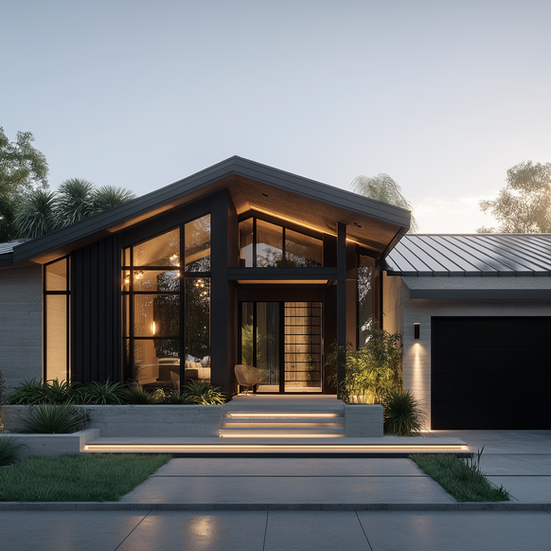
Your property can legally host an accessory dwelling unit if you meet these five non-negotiable conditions: your lot sits inside a qualifying zoning district (AU, EU, RU, or trended GU), the lot measures at least 7,500 square feet for new construction (5,000 square feet for a garage conversion), your proposed unit stays between 400 and 800 square feet in RU-1 (or up to 1,200 square feet subject to the 50 percent rule), you satisfy all overlay district and setback requirements, and you commit to a minimum one-month rental term — short-term vacation rentals are prohibited. If you clear those five hurdles, a turnkey detached one-bedroom ADU in Miami-Dade County currently costs between 180,000 dollars and 280,000 dollars, permits run 1,500 dollars to 3,000 dollars, and construction takes 6 to 18 months from pre-application to final inspection.
This guide unpacks every layer of Miami-Dade County’s ADU process — zoning overlays, lot math, permit sequencing, real cost tables, financing pathways, and the new state legislation that changes the landscape in 2026. It is built from current county code, completed project data, and direct comparisons with the most detailed public guides available.
Table of Contents
The Zoning Maze: Base Districts, Overlay Districts, and Why Both Matter
Most ADU project stalls can be traced to a single misunderstanding: reading only the base zoning letter code and assuming the rest follows. Miami-Dade County uses a layered system where overlay districts sit on top of base zones such as RU-1, AU, EU, or GU. These overlays control elevation, materials, impervious surface ratios, roof pitch, and even window placement — and they cannot be waived.
How to Find Every Layer That Affects Your Lot
Open the county’s My Neighborhood GIS tool and enter your address or folio number. The results screen will list:
-
Base zoning district (for example, RU-1 or AU)
-
All active overlay designations
-
Urban Development Boundary status
-
Flood zone designation
-
Wellfield protection boundaries
Print this screen. Bring it to every consultant conversation. If you skip this step and build plans around base zoning alone, you will pay to redesign.
The Four Overlay Districts That Most Often Control ADU Costs
Coastal High Hazard Area (CHHA). Properties east of US-1, and many between US-1 and I-95, fall inside the CHHA. This designation mandates elevation above the Base Flood Elevation, usually on pilings or a raised stem-wall foundation, and full compliance with FEMA and county flood codes. In practice, a CHHA overlay adds 25,000 dollars to 60,000 dollars to foundation costs compared to a standard slab-on-grade.
Wellfield Protection Area. Common in Sweetwater, West Kendall, and portions of Westchester. The overlay restricts certain construction materials — particularly those that could leach contaminants — and caps the percentage of your lot that can be covered by impervious surfaces (building footprint plus pavement). A property that already has a pool, a patio, and a wide driveway may have zero remaining impervious surface allowance for an ADU.
Architectural and Historic Preservation Districts. Neighborhoods including sections of Coral Gables, Miami Shores, and the MiMo Biscayne corridor require design review by a separate preservation board. Flat or modern-box designs are routinely denied. Exterior materials, window proportions, roof form, and even paint color must match the character of the primary structure and surrounding contributing buildings.
Scenic Transportation Corridor Overlays. Less discussed but equally binding, these overlays control building height, sign visibility, and landscaping along designated arterial roads. If your lot abuts such a corridor, the ADU’s roof height and exterior lighting will face extra scrutiny.
Minimum Lot Size and Unit Size by Zoning District (Quick-Reference Table)
| Zoning District | Minimum Lot Size (New Construction) | Minimum Lot Size (Garage Conversion) | Permitted ADU Size Range | Maximum ADU Size (50 Percent Rule) |
|---|---|---|---|---|
| RU-1 | 7,500 sq ft | 5,000 sq ft | 400 – 800 sq ft | 50% of primary dwelling, 1,200 sq ft absolute cap |
| AU (Agricultural Urban) | 7,500 sq ft | 5,000 sq ft | 400 – 800 sq ft | 50% of primary dwelling |
| EU (Estate Urban) | 7,500 sq ft | 5,000 sq ft | 400 – 800 sq ft | 50% of primary dwelling |
| GU (Government Use, trended residential) | 7,500 sq ft | 5,000 sq ft | 400 – 800 sq ft | 50% of primary dwelling |
Data sourced from Miami-Dade County ADU program requirements and Section 33-22 of the County Code.
Setback Requirements That Architects Need From Day One
Setback minimums vary by zoning district, but the following general rules apply across most RU-1 and EU lots:
-
Front setback: 25 feet minimum from the property line.
-
Rear setback: 10 feet minimum.
-
Side setback: 7.5 feet minimum for an interior lot; corner-lot side-street setbacks may increase.
-
Separation between principal dwelling and detached ADU: 10 feet minimum.
Where an abutting neighbor consents in writing, interior-side setbacks can sometimes be reduced to as little as 2 feet under the RU-1M(a) modified provisions. This affidavit-based reduction has been used successfully to add ADUs on narrower lots, but it requires the neighbor’s notarized signature and should never be assumed.
The Permitting Sequence: Step by Step Through Miami-Dade’s Process
Miami-Dade’s ADU permitting follows a linear sequence with multiple approval gates. Skipping a gate adds weeks or months of rework. The full timeline ranges from 6 to 18 months, with pre-approved modular plans shaving roughly 40 percent off the review period.
Step-by-Step Permit Timeline Table
| Stage | What Happens | Typical Duration | Key Cost Triggers |
|---|---|---|---|
| 1. Zoning Verification & Pre-Application | Confirm zoning, overlays, lot dimensions, UDB status. Optional pre-application meeting with county planners. | 2 – 4 weeks | None, or minor GIS print fees |
| 2. Professional Design & Engineering | Architect or engineer produces site plan, floor plan, elevations, structural, MEP drawings. Must be HVHZ-compliant. | 4 – 10 weeks | Design fees: 6% – 12% of construction cost |
| 3. Plan Submission & Intake | Plans submitted through ePlan or in person. Intake review checks for completeness. | 1 – 2 weeks | Plan review fee (roughly 40% of total permit fee) |
| 4. Zoning & Building Department Review | Zoning confirms setbacks, lot coverage, overlay compliance. Building reviews structural, HVHZ, electrical, plumbing. | 6 – 16 weeks | Revision rounds may trigger re-review fees |
| 5. Impact Fee Determination | Mobility, fire, police, parks, and educational impact fees calculated. Paid before permit issuance. | 1 – 2 weeks | Impact fees vary by unit type and location |
| 6. Permit Issuance | Building permit issued. Certificate of Use application filed. | 1 – 2 weeks | Final permit fee balance due |
| 7. Construction & Inspections | Foundation, framing, rough-in, HVHZ, final inspections. Multiple on-site visits. | 12 – 24 weeks | Change orders, reinspection fees |
| 8. Certificate of Occupancy & Certificate of Use | Final inspection passed. CO issued. CU issued and must be renewed annually. | 2 – 4 weeks | CU renewal fee (annual) |
Permit fee figures are based on Miami-Dade’s Building Fee Schedule and published project data.
What the Permit Fees Actually Cover
For a small ADU (400–600 square feet), total county permit fees typically fall between 1,500 dollars and 3,000 dollars. This includes:
-
Base building permit fee.
-
Plan review fee (approximately 40 percent of the total).
-
Electrical, plumbing, and mechanical sub-permits.
-
Administrative and technology surcharges.
Utility connection fees — bringing water, sewer, and electric service from the main house or street to the detached unit — add a separate 3,000 dollars to 10,000 dollars.
Impact Fees: The Line Item Most Guides Omit
Miami-Dade County collects impact fees for Mobility, Fire and Emergency Services, Police Services, Parks, and Educational Facilities before issuing any building permit. For an ADU, the residential impact fee schedule applies. The county expanded its impact fee exemption to cover housing developments serving households up to 120 percent of Area Median Income, effective August 8, 2022. If your ADU qualifies under this affordability provision, you may owe zero impact fees — a potential savings of several thousand dollars. Contact the Impact Fee office at 786-315-2670 to confirm eligibility before you budget.
The Certificate of Use (CU) Requirement
Miami-Dade County is unusual in requiring a renewable Certificate of Use for every ADU. Key details:
-
The CU is issued to the property owner only, not to a tenant.
-
The CU is non-transferable upon property sale.
-
It must be renewed annually, with the county performing an exterior inspection.
-
The CU mandates a minimum one-month rental term. Short-term rentals (Airbnb, VRBO) are prohibited.
Failure to maintain an active CU can trigger code enforcement fines and jeopardize your ability to collect rent.
Turnkey Cost Breakdown: Every Line Item, Every Range
A realistic ADU budget in Miami-Dade County must account for land conditions, overlay mandates, HVHZ materials, and soft costs. The table below shows a comprehensive construction budget for a 500-square-foot detached ADU, broken into three finish-quality tiers.
Detailed Construction Cost Breakdown by Finish Tier (500-Square-Foot Detached ADU)
| Cost Component | Standard Finishes | Mid-Range Finishes | Premium Finishes |
|---|---|---|---|
| Design & Engineering (architectural, structural, MEP) | 9,00012,000 | 14,00018,000 | 20,00025,000 |
| Permits & Plan Review (county fees) | 1,8003,000 | 1,8003,000 | 1,8003,000 |
| Impact Fees (if applicable) | 0–5,000 | 05,000 | 05,000 |
| Site Preparation & Foundation (slab-on-grade) | 18,00024,000 | 22,00028,000 | 28,00035,000 |
| Framing & Structural (HVHZ-rated) | 30,00038,000 | 35,00044,000 | 42,00052,000 |
| Roofing (HVHZ-rated, wind-resistant) | 9,00012,000 | 12,00015,000 | 15,00018,000 |
| HVHZ Windows & Doors (impact-rated) | 7,0009,000 | 10,00012,000 | 13,00016,000 |
| Electrical (sub-panel, wiring, fixtures) | 8,00010,000 | 10,00012,000 | 13,00015,000 |
| Plumbing (water, sewer, fixtures) | 9,00012,000 | 12,00015,000 | 15,00018,000 |
| HVAC (mini-split system) | 4,0005,500 | 5,5007,000 | 7,5009,000 |
| Insulation & Drywall | 5,0006,500 | 6,5008,000 | 8,00010,000 |
| Interior Finishes (flooring, cabinetry, paint) | 12,00016,000 | 18,00022,000 | 25,00032,000 |
| Appliances (kitchen plus laundry) | 3,0005,000 | 6,0008,000 | 9,00012,000 |
| Utility Connections (water, sewer, electric) | 3,0006,000 | 3,0006,000 | 3,0006,000 |
| Landscaping & Site Work | 3,0005,000 | 5,0008,000 | 8,00012,000 |
| Contingency (10% – 15% of total hard costs) | 12,00018,000 | 16,00022,000 | 22,00028,000 |
| Total Turnkey Range | 133,800189,500 | 175,300221,000 | 229,300289,000 |
Note: Foundations assumed to be slab-on-grade. If your property is in the Coastal High Hazard Area and requires pilings or a raised stem wall, add 25,000 dollars to 60,000 dollars. Modular pre-approved ADU solutions can reduce on-site labor and rough-in inspections, trimming 15,000 dollars to 25,000 dollars from the total.
Cost per Square Foot by Size and Construction Method
| ADU Size | Stick-Built (Range) | Modular / Pre-Approved Plan | Garage Conversion |
|---|---|---|---|
| 400 sq ft | 325475 / sq ft | 275375 / sq ft | 200325 / sq ft |
| 500 sq ft | 300440 / sq ft | 260350 / sq ft | 185300 / sq ft |
| 600 sq ft | 280415 / sq ft | 245330 / sq ft | 170–280 / sq ft |
| 800 sq ft | 260385 / sq ft | 230–310 / sq ft | 160260 / sq ft |
Garage conversions cost less per square foot because the foundation, framing, and roof structure are already in place. However, they must still meet HVHZ standards for windows, doors, and structural integrity, and they trigger a different minimum lot-size threshold (5,000 square feet).
Design and Construction Standards: What Miami-Dade’s HVHZ Code Actually Requires
Miami-Dade and Broward counties enforce the High-Velocity Hurricane Zone (HVHZ) provisions of the Florida Building Code. These are the most stringent wind-resistance standards in the United States. Every ADU, regardless of size, must comply.
HVHZ Requirements Checklist
-
Wind load design: ASCE 7 wind maps show design wind speeds of 170 to 186 mph for Miami-Dade, depending on site-specific exposure category.
-
Impact-resistant windows and doors: Must carry Miami-Dade County Notice of Acceptance (NOA) or Florida Product Approval.
-
Reinforced roof-to-wall connections: Continuous load path from roof sheathing through walls to foundation.
-
Impact-rated garage doors: Required if the ADU includes a garage.
-
Exterior finish materials: Must be tested and approved for HVHZ application.
These requirements add meaningful cost — roughly 15 percent to 20 percent above what the same square footage would cost in a non-HVHZ jurisdiction — but they also produce a structure that qualifies for wind-mitigation insurance discounts.
Design Compatibility: Matching the Primary Residence
The county code mandates that ADUs “match the exterior finish and roof style of the primary residence.” In architectural preservation districts, this extends to window muntin pattern, eave detail, and material palette. Propose a design that echoes the main house from the first submittal — attempting to slip a contemporary cube into a Mediterranean neighborhood will result in a rejection letter and a redesign cycle costing weeks.
Parking Requirements
The county generally requires one off-street parking space per ADU. This space cannot encroach on required setbacks and must be surfaced with an approved material. In some cases, on-street parking directly abutting the property can substitute, but this requires specific approval.
Financing Your ADU: Options, Rates, and What Lenders Want
Multiple financing pathways exist for Miami-Dade ADU projects. The best option depends on your existing home equity, credit profile, and timeline.
Financing Options Comparison Table
| Financing Method | Typical Rate (2026) | Loan-to-Value / Terms | Key Considerations |
|---|---|---|---|
| Home Equity Line of Credit (HELOC) | 7.25% – 9.50% APR (variable) | Up to 85% LTV | Fast access to funds; variable rate risk; interest may be tax-deductible |
| Home Equity Loan | 7.00% – 8.50% (fixed) | Up to 80% LTV | Fixed monthly payment; lump-sum disbursement |
| Cash-Out Refinance | 6.50% – 7.50% (fixed) | Up to 80% LTV | Replaces existing mortgage; closing costs apply |
| Construction Loan | 6.75% – 7.50% | Up to 80% of post-construction value | Interest-only during construction; converts to permanent loan or requires refinance |
| Personal Loan (HFS Financial, others) | 7.99% – 12.00% | Up to $300,000; no equity required | Faster approval; higher rate; suitable for homeowners with limited equity |
| Property Assessed Clean Energy (PACE) | Varies | Repaid through property tax bill | Only for qualifying energy-efficiency and wind-resilience improvements |
Rates sourced from Mesocore financing summaries and Bankrate. PACE details from Florida PACE program documentation.
Fannie Mae’s 2025 ADU Rental Income Rule
Fannie Mae updated its underwriting guidelines in 2025 to allow lenders to count projected ADU rental income when qualifying borrowers. This change can add 75,000 dollars or more to your borrowing capacity. If you plan to finance the ADU through a cash-out refinance or construction loan, ask your lender whether they underwrite to the updated Fannie Mae standard.
Rental Income, ROI, and Property Value Impact
An ADU is a real estate investment. The numbers matter.
Rental Income by Unit Type (Miami-Dade County, 2026)
| Unit Type | Monthly Rent Range | Annual Gross Income | Effective Cap Rate (Estimated) |
|---|---|---|---|
| Studio / Efficiency (400 sq ft) | 1,0001,500 | 12,00018,000 | 5.5% – 8.0% |
| One-Bedroom (500 sq ft) | 1,2001,800 | 14,40021,600 | 6.0% – 9.0% |
| One-Bedroom (600 sq ft) | 1,4002,000 | 16,80024,000 | 6.5% – 9.5% |
| Two-Bedroom (750 – 800 sq ft) | 1,6002,200 | 19,20026,400 | 7.0% – 10.0% |
Rental data compiled from Mesocore market analysis and Property Exemption Florida ADU guide.
ADU-equipped properties command a 20 percent to 35 percent resale premium over comparable homes without ADUs, based on multiple market studies. The payback period for a standard-quality 500-square-foot ADU renting at 1,500 dollars per month falls between 7 and 10 years, after which the unit generates pure positive cash flow — less ongoing maintenance and CU renewal costs.
Operational Costs Table
| Annual Cost Item | Estimated Range |
|---|---|
| Certificate of Use renewal | 100300 |
| Property insurance increment on ADU | 4001,200 |
| Property tax increase (estimated 10% on added value) | 6001,800 |
| Maintenance and repairs | 5001,200 |
| Total Annual Operating Cost | 1,6004,500 |
Florida’s 2025–2026 Statewide ADU Legislation: What It Means for Miami-Dade Homeowners
Senate Bill 184 (Effective July 1, 2025)
Florida Senate Bill 184 mandates that every county must allow at least one ADU per single-family lot. The bill includes several homeowner protections:
-
Local governments cannot require additional parking beyond one space per ADU.
-
Local governments cannot mandate that the owner live on the property to rent the ADU.
-
The homestead exemption on the primary residence is protected even when the ADU is rented.
Senate Bill 48 (Pending 2026)
Senate Bill 48, advancing through the 2026 legislative session, would require all Florida local governments to adopt ADU-permissive ordinances by December 1, 2026. It further prohibits vacation-rental use of ADUs and reinforces the parking and owner-occupancy protections in SB 184.
What This Means for Your Project
State-level mandates reduce the risk that Miami-Dade County will tighten its ADU rules in the future. The prohibition on short-term rentals aligns with existing county CU requirements. The homestead protection provision is especially valuable: even if you generate 18,000 dollars in annual ADU rental income, the primary residence retains its full homestead exemption and Save Our Homes cap on assessed value growth.
Step-by-Step Action Plan: From Feasibility to Move-In
Phase 1: Feasibility (Weeks 1–4)
-
Look up your property on the My Neighborhood GIS tool. Print the zoning and overlay report.
-
Measure or confirm lot dimensions. Verify lot size meets the 7,500-square-foot minimum (5,000 square feet for garage conversions).
-
Identify all overlay districts and read their specific requirements.
-
Estimate available impervious surface coverage. If your lot is already near the cap, consult an engineer before proceeding.
-
Call the Impact Fee office (786-315-2670) to determine whether your project qualifies for an exemption.
Phase 2: Design and Permitting (Weeks 5–30)
-
Hire a Florida-licensed architect or engineer with Miami-Dade HVHZ experience.
-
Develop schematic plans that match the primary residence exterior and satisfy overlay requirements.
-
Submit for pre-application review (optional but recommended; 40 percent faster overall with pre-approved blueprints).
-
Finalize construction documents, including structural calculations and HVHZ product approvals.
-
Submit complete permit package through ePlan.
-
Respond to all review comments within the allowed window to avoid expiration.
-
Pay impact fees and permit fees; receive building permit.
-
File Certificate of Use application concurrently.
Phase 3: Construction (Weeks 31–50)
-
Complete site preparation and foundation.
-
Frame, roof, and install HVHZ windows and doors.
-
Complete rough-in electrical, plumbing, and HVAC.
-
Schedule and pass all required inspections: foundation, framing, rough-in, HVHZ, and final.
-
Complete interior finishes, appliance installation, and landscaping.
Phase 4: Occupancy (Weeks 51–54)
-
Pass final building inspection; receive Certificate of Occupancy.
-
Receive Certificate of Use (renew annually).
-
Set up separate utility metering if desired.
-
List for rent or prepare for family move-in.
Resources and Links
-
Miami-Dade County ADU Program Page: https://www.miamidade.gov/global/economy/building/accessory-dwelling-unit-adu.page
-
My Neighborhood GIS Tool: https://gis.mdc.miami-dade.gov/MyNeighborhood/
-
Section 33-22 of County Code (Accessory Units): https://library.municode.com/fl/miami_-_dade_county/codes/code_of_ordinances?nodeId=PTIIICOOR_CH33ZO_ARTIINGE_S33-22ACUN
-
Miami-Dade Impact Fee Office: 786-315-2670
-
Mesocore Pre-Approved ADU Blueprint Program: https://www.mesocore.com/model-e-adu
-
Florida PACE Financing: https://floridapace.gov