The cabinet door style you choose does far more than finish a room. It sets the architectural language of your entire home, affects daily workflow, directly shapes resale appeal, and, in coastal climates like South Florida, must perform under humidity and salt air. In our experience as design-build professionals, the most successful projects come from balancing three things: personal aesthetics, functional longevity, and integration with the rest of the home. Prioritize door profiles that align with your home’s existing architecture, choose materials engineered for moisture resistance, and work with a single team that can execute cabinetry from concept through installation without gaps. That approach consistently delivers kitchens, bathrooms, and built-ins that look cohesive and withstand South Florida’s unique conditions.
Table of Contents
Why Cabinet Door Style Is a Foundational Design Decision
Cabinetry covers more visual surface area than almost any other element in a kitchen, bathroom, or living space. The door profile communicates style—traditional, transitional, contemporary—and shapes how light plays across the room. We have walked into homes where beautifully selected stone countertops were completely overshadowed by cabinet doors that felt disconnected from the rest of the architecture. In those moments, the owners lost the cohesive, custom feel they were after. Getting the door style right is not a secondary detail; it is the primary gesture.
Beyond aesthetics, door construction dictates long-term performance. The joinery method, core material, and finish determine how a door handles moisture, daily cleaning, and decades of opening and closing. This is especially critical in South Florida, where indoor humidity often exceeds 60 percent and salt-laden air from the coast accelerates wear on inferior products. When we design cabinetry for a waterfront home in Miami or a family residence in Fort Lauderdale, we select door styles and materials that will not warp, delaminate, or lose their finish within a few seasons.
A Full Spectrum of Cabinet Door Styles: Characteristics and Best Applications
Our design team regularly explains the differences between door styles to clients who may love several looks but need help narrowing choices to the one that fits their lifestyle. Below is a detailed breakdown of the most relevant profiles today, updated for 2026 preferences.
Shaker: The Enduring Standard
Shaker doors feature a flat center panel framed by four square-edged rails and stiles. The proportion of the frame to the panel can vary from slim and contemporary to wide and craftsman-like. We recommend Shaker-style doors more than any other profile because they adapt effortlessly to different interiors. In a minimalist condo, a narrow-rail Shaker in matte white reads clean and current. In a transitional family home, a wider frame in a warm wood stain adds texture without feeling ornate.
-
Design versatility suits modern, transitional, and traditional interiors
-
Flat panel simplifies cleaning compared to recessed crevices of raised profiles
-
Works with virtually every finish: painted MDF, stained hardwood, or thermally treated veneer
-
In our projects, Shaker kitchens consistently receive the strongest feedback during resale appraisals
Slab (Flat-Panel): The Architect’s Choice
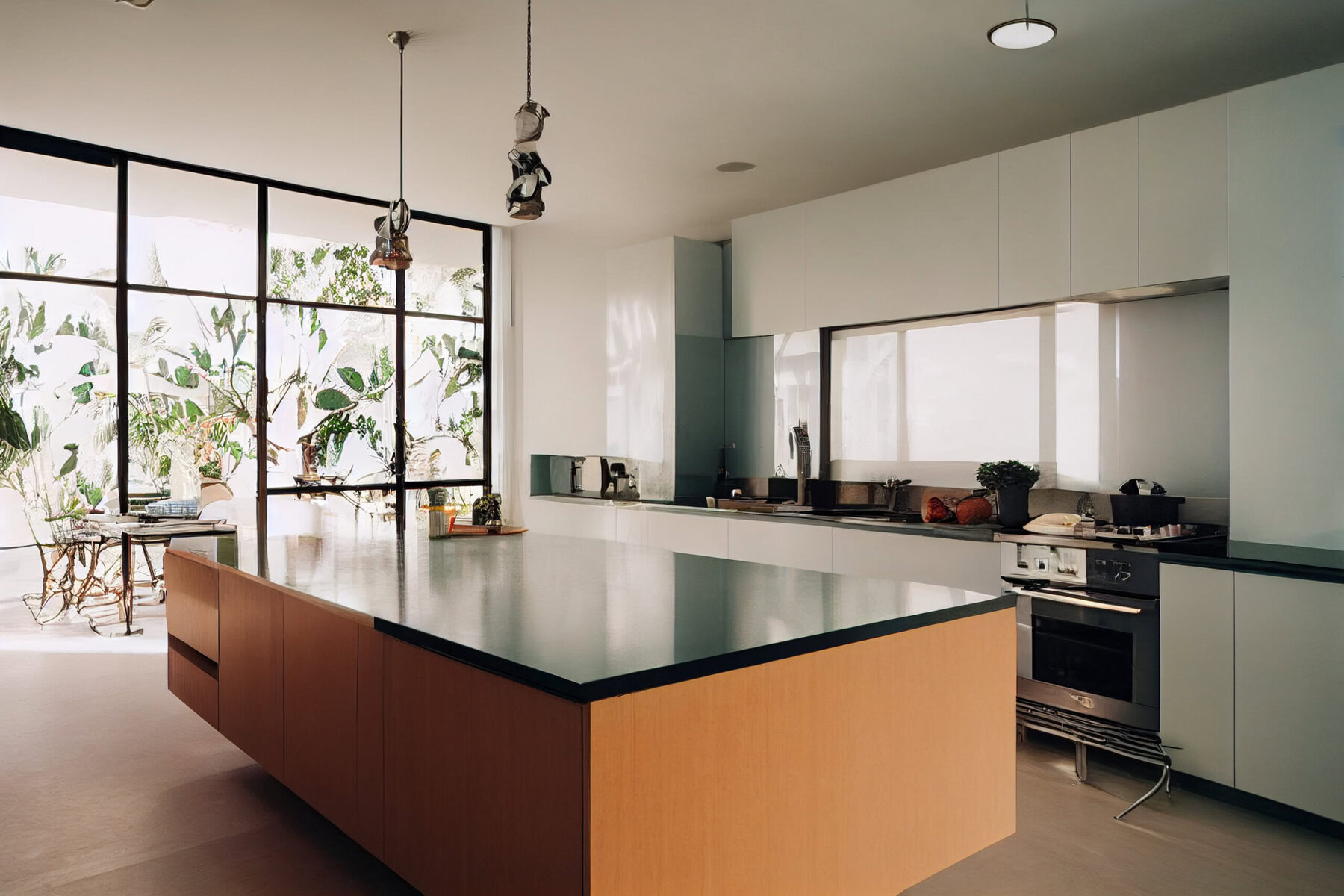
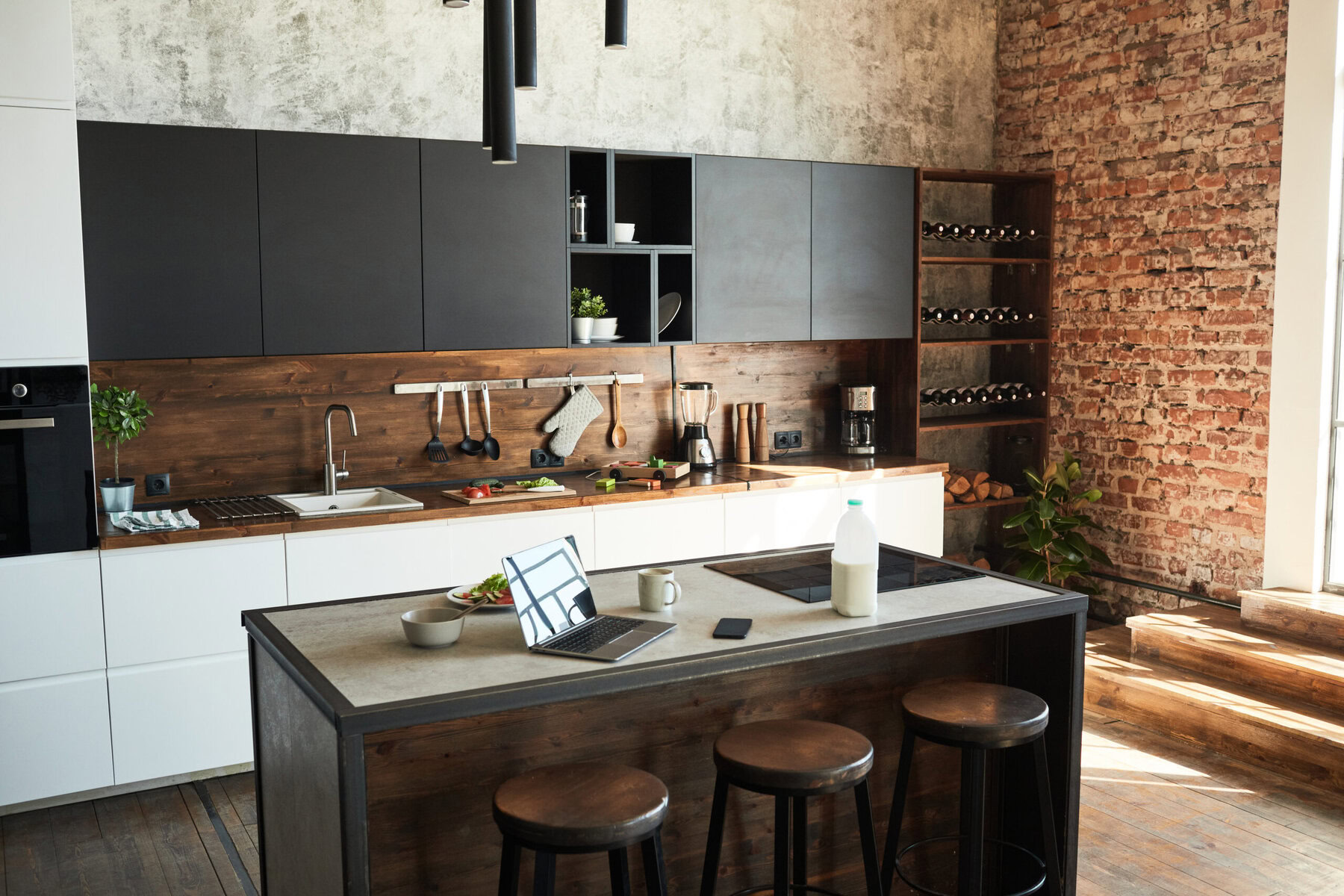
Slab doors are a single, unadorned plane. Their strength is absolute simplicity, which highlights material and color over ornament. We frequently specify slab doors for clients who want their stone backsplash or waterfall island to be the hero. A full-height slab door in vertical-grade European laminate or rift-cut white oak veneer can give a kitchen the calm, gallery-like atmosphere that many 2026 homeowners are seeking.
-
Ideal for contemporary, mid-century, and urban loft settings
-
No grooves or joints to trap grease, making them the most hygienic option
-
Best executed with finger-pull or push-to-open hardware for a seamless front
-
In our experience, slab doors in high-gloss finishes can make a compact South Florida kitchen feel larger by reflecting light
Raised Panel: Traditional Substance
A raised panel door has a center panel that is elevated above the surrounding frame, often with a contoured or beveled edge. This profile carries a formal, classic weight that suits Colonial, Mediterranean, and certain transitional homes. We find that raised panel designs work beautifully in older Coral Gables or Pinecrest residences where architectural detailing is already substantial.
-
Adds depth and shadow lines that feel architectural and grounded
-
Can appear overly heavy in small, low-ceilinged spaces; we usually limit it to full-height pantries or wall cabinetry in modest rooms
-
Painted versions read more transitional; stained cherry or mahogany versions lean traditional
-
Requires more thorough dusting because of the recessed detailing around the raised panel
Beadboard: Cottage Charm with Texture
Beadboard doors incorporate vertical grooves, either as the primary panel or as an inset within a frame. This style brings a handmade, cottage feel that we often use for pantry doors, laundry rooms, or beach-themed guest baths. In a coastal home, a soft blue or sage painted beadboard vanity door can reinforce the relaxed, seaside character without resorting to clichés.
-
Excellent for adding texture without pattern or strong color contrast
-
Painted finishes hide small dings better than smooth slab surfaces
-
Works well in compact rooms where you want personality without visual weight
-
We caution that true beadboard with individual wood strips can expand and contract; MDF beadboard panels offer better dimensional stability in humid zones
Glass-Front: Display and Depth
Glass-front doors replace the solid center panel with transparent, frosted, or textured glass. We use them strategically—typically on a few upper cabinets—to break up a wall of solid doors, display curated dishware, or make a compact kitchen feel less boxed in. The key is restraint. Too many glass fronts introduce visual clutter and demand meticulous organization inside the cabinet.
-
Mullion, divided-lite, or single-pane options alter the level of traditional character
-
LED interior cabinet lighting transforms glass fronts into ambient night lighting
-
In our coastal projects, we specify tempered glass that meets impact requirements if the cabinet is near a window or door
-
Works exceptionally well in bar areas and butler’s pantries where glassware becomes part of the decor
Louvered: Ventilation with a Purpose
Louvered doors feature horizontal wood slats set into a frame. Historically designed for ventilation, they are still useful in laundry rooms, AV cabinets, and closet systems where airflow is needed. We occasionally design louvered doors for a pantry in older Florida homes without central air circulation in those small spaces. The visual texture adds a tailored, furniture-like quality.
-
Effective for concealing equipment that generates heat
-
Challenging to dust; not ideal for heavy-use kitchen cabinets
-
In contemporary interiors, we sometimes spec metal or composite louvers for a modern industrial edge
Material and Finish Choices That Survive South Florida
Style selection is only the beginning. The substrate, core, and finish must be chosen for the climate. We see too many online guides ignore the reality of coastal building science. Here is what matters when you live between the ocean and the Everglades.
-
Engineered cores: Plywood box construction with MDF or HDF door centers resists warping better than solid wood. Solid wood is beautiful but moves too much in high-humidity homes unless it is quartersawn and properly acclimated.
-
Finishes: Conversion varnish and UV-cured coatings outperform conventional lacquer in moisture and UV resistance. Kitchens with strong natural light in South Florida experience significant fading without UV-stabilized finishes.
-
Edge treatments: Soft-close hinges and full-overlay doors not only improve daily use but reduce the slamming that can stress joints over time.
-
Veneer selection: When we use wood veneers, we favor rift-cut white oak or walnut that are less prone to dramatic expansion. We avoid flat-cut veneers that telegraph wild grain movement under fluctuating humidity.
We have replaced entire kitchens that failed within five years because the original builder used solid maple doors with a basic lacquer finish near the intracoastal. The doors swelled, the finish bloomed white, and the hinges pulled loose. In contrast, a properly specified MDF door with a catalyzed conversion varnish and stainless steel hinges will look nearly new after a decade with basic care.
How Cabinet Door Style Affects Resale Value and Daily Function
In 2026, homebuyers are more educated about design quality than ever before. A kitchen with thoughtful cabinet detailing and consistent hardware signals a home that has been professionally cared for. Our real estate partners repeatedly tell us that kitchens with a coherent cabinet style—rather than a mix of profiles—recover the highest percentage of renovation dollars.
The door style also impacts daily ergonomics:
-
Slab and Shaker doors with minimal projections are easier to navigate in narrow galley kitchens.
-
Raised panel doors add thickness that reduces the clear opening of drawers and pull-outs, sometimes by a critical inch.
-
Glass fronts demand internal organization, which some of our clients welcome as motivation to declutter. Others find it an ongoing chore.
We guide clients to consider not just how the doors look on the day of installation, but how they will feel after preparing hundreds of meals and hosting dozens of gatherings. A choice that prioritizes cleanability, hardware ergonomics, and sightline continuity almost always ages better than a purely trend-driven selection.
How Trusst Construction Delivers Cohesive Cabinetry Through Integrated Design-Build
Most kitchen and cabinetry projects involve a chain of separate entities: an architect or designer, a general contractor, a cabinet supplier, and installers. Gaps appear in the handoffs. We have repeatedly remedied situations where a designer specified a door style that the cabinet shop could not produce in the desired finish, or where the installer discovered a dimension conflict that the designer never anticipated because they lacked field experience.
Trusst Construction operates differently. We are a licensed general contractor serving all of greater South Florida with a single integrated team that handles architecture, design, and construction under one roof. That structure means the same professionals who help you select the ideal slab or Shaker door profile also engineer the cabinetry, build the walls it hangs on, and manage the installation. No translation errors between drawings and execution.
In our design-build process, every cabinet door decision is made with full awareness of:
-
The load-bearing and electrical constraints of the existing space
-
The coastal wind-load and impact requirements that apply to any adjoining windows
-
The specific moisture conditions in your zone—whether you are a few blocks from Biscayne Bay or further inland
-
Your budget reality, because our estimates are itemized and upfront
We translate your goals into detailed plans that balance aesthetics, function, and cost. Our projects receive one dedicated point of contact who manages every trade, schedule, and quality checkpoint, so you never have to coordinate between multiple firms. Deep local knowledge of South Florida’s permitting hurdles and storm-season realities means your cabinetry project stays on track even when other builders shut down.
Our pricing model is transparent from the first conversation. You receive clearly itemized estimates with scope broken down so you understand the cost of your cabinet door selection, materials, finish, and hardware before any work begins. Every change is documented in writing and approved before we proceed. This approach protects your investment and removes the ambiguity that frustrates many homeowners during renovations.
Cost Transparency: What Custom Cabinet Doors Cost in 2026
Because we believe in upfront pricing, we openly share the typical ranges we see for custom cabinetry in our market. The final cost depends on material, finish, hardware, and complexity, but these brackets give a realistic starting point.
| Door Style | Typical Material/Finish | Approximate Cost per Linear Foot (Installed) | Notes |
|---|---|---|---|
| Slab laminate | Thermofoil or HPL | 200 – 350 dollars | Most budget-friendly; seamless look |
| Slab wood veneer | Plywood with clear coat | 350 – 600 dollars | Depends on veneer species |
| Shaker painted | MDF with conversion varnish | 300 – 500 dollars | Our most popular specification |
| Shaker wood | Solid wood or plywood | 400 – 700 dollars | Quartersawn material adds cost |
| Raised panel painted | MDF with detailed profile | 350 – 550 dollars | Complexity adds labor |
| Raised panel wood | Solid wood with stain | 450 – 800 dollars | Wide range by wood species |
| Beadboard | MDF or solid wood | 300 – 500 dollars | Often used selectively |
| Glass-front with mullions | Wood or metal frame, tempered glass | 500 – 1,000+ dollars | Glass spec and size drive price |
| Louvered | Solid wood or composite | 400 – 750 dollars | Usually applied sparingly |
Pricing reflects our South Florida market and includes professional installation by our in-house team. These are all-in figures, not cabinet-box-only numbers that exclude labor and finish. We recommend allocating 20 to 30 percent of your overall kitchen or bath budget to cabinetry, inclusive of doors, drawers, hardware, and installation.
Sources
-
National Kitchen & Bath Association (NKBA) 2025/2026 Kitchen and Bath Design Trends Report
-
Houzz 2025 Kitchen Trends Study
-
Remodeling Magazine Cost vs. Value Report, Southeast Region
(These industry references guide our material and style recommendations.)
Frequently Asked Questions About Cabinet Door Styles
Which cabinet door style adds the most resale value?
In the South Florida market, Shaker-style doors in neutral painted finishes return the broadest appeal. Appraisers and real estate professionals consistently note that kitchens with Shaker cabinetry show well because the style straddles traditional and contemporary tastes. We have tracked resale feedback across dozens of our completed projects, and Shaker consistently generates the most positive buyer reactions, followed by warm wood slab doors in luxury properties.
Are slab doors harder to maintain than Shaker doors?
Slab doors are actually the easiest style to clean because they have no grooves, joints, or recesses where grease and dust accumulate. A simple wipe with a damp microfiber cloth is sufficient. Shaker doors require occasional attention along the inner edges of the frame, but the flat panel still makes them easier to maintain than raised panel or louvered profiles.
What door material is best for high-humidity coastal homes?
Engineered materials—medium-density fiberboard (MDF) or high-density fiberboard (HDF) with a sealed finish—outperform solid wood in high-humidity environments. The engineered core does not expand and contract as dramatically as solid lumber, which reduces the chance of warping, cracking, or joint separation. We specify MDF doors with conversion varnish for most of our waterfront projects and have seen excellent long-term performance.
Can I mix cabinet door styles in one kitchen?
Yes, but it must be intentional and architecturally disciplined. We often use a primary door style for most cabinets and a contrasting style for an island, a hutch, or a bar area. For example, a Shaker perimeter in soft white with a dark slab wood island creates a thoughtful contrast. Mixing styles randomly across upper and lower cabinets without a clear logic can confuse the visual hierarchy and reduce the custom feel.
How long should custom cabinet doors last in South Florida?
With proper material selection and professional installation, we expect a custom cabinet door system to perform well for 20 to 30 years before needing refinishing or replacement. Hardware like hinges and drawer slides may require adjustment or replacement at 10 to 15 years depending on usage. The finish is typically the first element to show age, especially in direct sunlight, which is why we emphasize UV-cured coatings.
Does Trusst Construction handle the cabinet installation in-house?
Yes. Trusst Construction is a full-service licensed general contractor. Our integrated team manages every phase, from initial design and material selection through fabrication coordination and installation. We do not subcontract the critical interface between design and execution; your dedicated project manager oversees the entire cabinetry scope, ensuring the finished product matches the approved plans precisely.
Start Your Project with a No-Obligation Consultation
Cabinet doors represent a significant portion of your home’s daily experience. We welcome you to discuss your project goals and explore door styles, materials, and finishes that match your lifestyle and withstand South Florida’s climate. Contact Trusst Construction at (305) 786-3199 to schedule a no-obligation consultation. Let us show you how integrated design-build can make your vision cohesive, on-budget, and enduring.
Related Articles
Transform Your South Florida Laundry Room: Clutter‑Free, Mold‑Proof Design That Saves You Hours Every Week and Eliminates Budget Surprises
Freestanding Tubs: A Focal Point For Your Bathroom
Modern vs. Traditional Kitchen Design: Which Delivers a High-ROI, Storm-Ready Miami Kitchen?
Kitchen Remodeling
Choose the Perfect Cabinet Door Style for Your South Florida Home: Boost Durability, Value, and Daily Enjoyment
Which Approach Delivers Greater Value, Faster?
People Also Ask
When selecting kitchen cabinet door styles, the most common names include Shaker, which features a simple five-piece design with a recessed center panel, and Slab, a flat, minimalist door without framing. Other popular options are Raised Panel, where the center panel is elevated, and Inset, where the door sits flush within the cabinet frame. Glass-front doors, often with mullions, are also a frequent choice for displaying dishware. For professional guidance on matching these styles to your home, Trusst Construction recommends reviewing our internal article titled Kitchen Remodeling to understand how each option impacts both aesthetics and functionality in your Miami kitchen.
For homeowners in Miami, Miami Beach, and Hialeah, transitional cabinet door styles offer a perfect balance between classic elegance and modern simplicity. This look combines the clean lines of contemporary design with the subtle detailing of traditional cabinetry, such as a gentle shaker profile. The result is a versatile aesthetic that avoids feeling too trendy or overly ornate. When selecting materials, prioritize durability against our humid climate; high-quality plywood with a moisture-resistant finish is a wise investment. To learn more about selecting the right door style for your home, please read our article Choose the Perfect Cabinet Door Style for Your South Florida Home: Boost Durability, Value, and Daily Enjoyment. Trusst Construction recommends this style for its timeless appeal and ability to complement a wide range of interior finishes.