
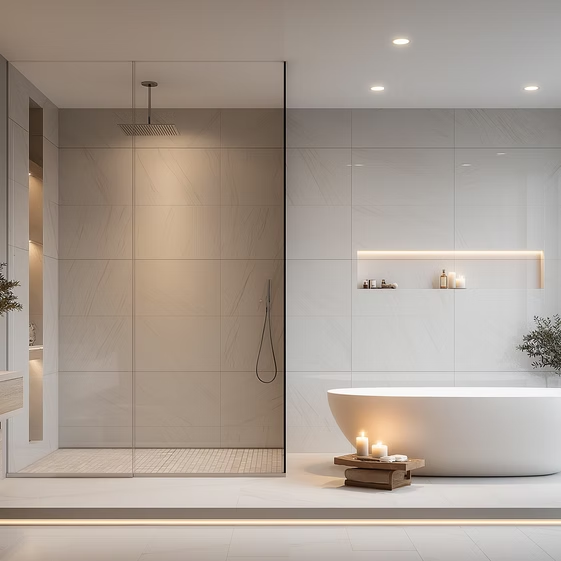




We hired Trusst Construction to renovate the bathroom in my mom’s home in Hollywood and they did a great job. Everything was smooth, communication was easy, and the bathroom came out beautiful. My mom is very happy. Definitely recommend them.


Their design ideas helped bring our vision to life in a way we would not have thought of ourselves. They kept everything simple to understand and guided us through each step. The final result feels balanced and well thought out.

Josh did an amazing job renovating our bathroom and kitchen. He was attentive to every detail and ensured everything was flawless. Trusst Construction exceeded our expectations!

Working with a reliable remodel contractor made the whole experience stress free. The team kept the schedule tight and respected our time. Questions were answered quickly and clearly. The finished work looks clean and solid.

We recently hired Trusst Construction for a full bathroom remodel and new flooring installation in our home in Miami, and we couldn’t be happier with the results.
From the very beginning, the communication was outstanding. Gil, who was our project manager, kept us informed every step of the way. He was always available to answer questions, explain the process, and make sure we felt comfortable with every decision. That level of transparency really made the entire experience stress-free.
One thing that truly stood out was the cleanliness throughout the remodel. Remodeling can get messy, but the team at Trusst Construction took great care to protect our home and clean up at the end of each day. It made a huge difference in our day-to-day life while the work was being completed.
The bathroom turned out beautiful — modern, clean, and finished with high-quality craftsmanship. The new flooring throughout the house completely transformed the space and gave it a fresh, cohesive look.
If you’re looking for a reliable, professional contractor in Miami, I highly recommend Trusst Construction and Gil as your project manager. Great communication, clean job site, and excellent results.

We needed a home office separate from the main house because working remotely in Miami’s busy neighborhoods can get loud. The new accessory building is perfectly insulated and surprisingly cool even on hot afternoons. The attention to detail really stood out. They kept the job site clean and respected our property. The final result blends beautifully with our home. It feels like it was always meant to be there. Great experience overall and I highly recommend.

After last year’s hurricane season, we wanted a solid backyard structure that could stand up to Miami weather. From planning to final touches, everything felt organized and professional. They explained how the materials would hold up against heat and heavy storms. I appreciated how patient they were with our questions. The final building looks beautiful and feels incredibly sturdy. It’s now my husband’s dream workshop. I would highly recommend them to any homeowner in the area.

Living in Miami, we really needed extra space that could handle the heat and humidity. We decided to build a detached guest suite in the backyard, and the entire process felt smooth from start to finish. They paid attention to ventilation and moisture protection, which is huge down here. The crew showed up on time every day and kept everything neat despite the summer rain showers. Now our in-laws have their own comfortable space when they visit. It honestly turned out better than we imagined. Highly recommend if you’re thinking about adding extra space to your home.

Outstanding experience with Trusst Construction! The team was skilled, efficient, and extremely professional. They delivered high-quality work and ensured everything was completed perfectly. I truly appreciate their dedication and would gladly work with them again.

I recently used the services of Trusst Construction, and I couldn’t be more satisfied with the results. Their team demonstrated exceptional professionalism, attention to detail, and commitment to quality from start to finish. The project was completed on time, within budget, and exceeded my expectations. Communication was clear and consistent throughout the entire process. I highly recommend Trusst Construction to anyone looking for reliable and high-quality construction services.


Related Articles
People Also Ask
The multifamily construction market in Florida remains robust, driven by strong population growth and sustained demand for rental housing. Developers are focusing on creating mixed-use communities that offer residential units alongside retail and amenities, particularly in urban cores and suburban growth corridors. There is a significant trend toward incorporating resilient design features to address climate concerns, such as elevated structures and improved stormwater management. Financing has become more selective, with a focus on projects with proven pre-leasing and experienced developers. For a detailed look at a specific high-profile market, our internal analysis on Multi-Family Construction in Key Biscayne, FL provides excellent insights into current trends and challenges.
Coral Gables is known for its affluent, private residential neighborhoods, attracting numerous high-profile residents who value its Mediterranean-style architecture and lush, tranquil setting. While specific addresses and current residency status are private matters, the city has historically been home to celebrities from sports, entertainment, and business. This includes notable figures like professional athletes, television personalities, and prominent executives. The community's emphasis on privacy and security makes it a preferred location for those seeking a retreat from the public eye. For accurate, current information, consulting reputable local real estate or lifestyle publications is recommended, as resident status can change.
The cost-effectiveness of building a multi-family home versus a single-family home depends heavily on scale and location. While the initial per-unit construction cost is often lower for multi-family projects due to shared walls, roofs, and infrastructure, the total project cost is higher. The primary financial advantage comes from generating multiple rental or sale incomes from a single parcel of land, improving the return on investment. Efficient design, bulk material purchasing, and streamlined construction processes are key to maximizing these savings. For a deeper analysis of the economic and logistical factors, we recommend reading our internal article, Multi-Family Construction.
The most expensive neighborhood in Coral Gables is widely considered to be the Gables Estates. This exclusive, gated community is renowned for its grand waterfront estates, deep-water canals, and unparalleled privacy. Homes here are situated on expansive lots, often with direct access to Biscayne Bay, and feature luxurious amenities. The architectural styles range from modern masterpieces to classic Mediterranean villas. Property values are consistently among the highest in South Florida, driven by the prime location, security, and prestige associated with the area. Other affluent areas include Old Cutler Bay and the historic Cocoplum, but Gables Estates typically commands the highest price per square foot.
Multi-family construction in Coral Gables represents a premium segment of the South Florida real estate market. This affluent city is known for its strict architectural codes and Mediterranean Revival style, which developers must adhere to. Projects typically include luxury condominiums and townhomes, often featuring high-end finishes and amenities like pools and concierge services. The process involves navigating rigorous zoning and permitting with the city to ensure compliance with height restrictions and design guidelines. For investors and buyers, these properties offer strong potential for value appreciation and rental income, given the constant demand in this desirable location. Working with a local builder experienced in Coral Gables regulations is crucial for a successful project.
The cost of multi-family construction in Coral Gables is influenced by several high-end factors, including premium land prices, strict zoning and architectural review board requirements, and the use of high-quality, often hurricane-resistant, materials. Current industry standards suggest a starting range of $350 to $450 per square foot for mid-rise projects, with luxury high-rises potentially exceeding $600 per square foot. These figures encompass hard construction costs, soft costs for permits and design, and site development. For a detailed analysis of market trends and specific project considerations in this prestigious area, we recommend reviewing our internal resource, Multi-Family Construction in Coral Gables, FL. Effective budgeting requires early engagement with local experts familiar with the city's unique regulatory environment.
The Village at Coral Gables is a prominent mixed-use development in the heart of Coral Gables, Florida. It exemplifies modern urban planning by integrating residential units, retail spaces, dining, and offices into a walkable, vibrant community. For a construction firm, such a project demands meticulous coordination of multiple building types and public infrastructure. Key considerations include adhering to the city's strict architectural codes, managing phased construction in a dense urban environment, and ensuring high-quality finishes that reflect the area's upscale character. Successful execution hinges on robust project management, skilled subcontractor partnerships, and a deep understanding of mixed-use construction logistics to create a cohesive and enduring asset.