Custom ADU Builder Miami Springs | Infill Solutions for Mature Lots

Customer Reviews

ADU Building in Miami Springs Starts With Respect for Established Properties

In Miami Springs, we don’t treat properties as blank slates. Homes here—near the Miami Springs Golf Course or along Curtiss Parkway—sit on established lots with mature trees and long driveways. Building an Accessory Dwelling Unit (ADU) isn’t about forcing a new structure where it doesn’t belong; it’s about weaving additional living space into the existing landscape.

Whether you are near the Community Center or the historic Miami Springs Circle, the need for an ADU usually grows from a shift in how you use your home. Adult children need privacy near the airport. Aging parents move in. Work-from-home life demands a dedicated office.

We specialize in fitting these new spaces into the unique bones of Miami Springs properties. We look at your site as it exists today, ensuring the new construction complements the lot’s original balance rather than disrupting it.

Why Homeowners in Miami Springs Choose to Build ADUs

ADUs in Miami Springs are typically built with long term use in mind. They are not quick additions or short term experiments.
Common reasons homeowners move forward with ADU construction include:

Creating a private space for extended family

Supporting multigenerational living without crowding the main home

Adding a separate unit that does not interfere with daily routines

Making use of yard space that is no longer actively used

In many cases, homeowners want flexibility without sacrificing the character of the main residence.

Site Conditions That Shape ADU Construction in Miami Springs

Properties in Miami Springs present a different set of challenges than denser coastal neighborhoods. Lots are often deeper, but they come with features that cannot be ignored.
Typical site considerations include:

Ignoring these details early often leads to conflicts once construction begins.

How Trusst Construction Approaches ADU Projects in Miami Springs

Our approach starts with understanding how the property functions today. We evaluate circulation, access, tree protection, utility routing, and how construction can move forward without disrupting the main home.
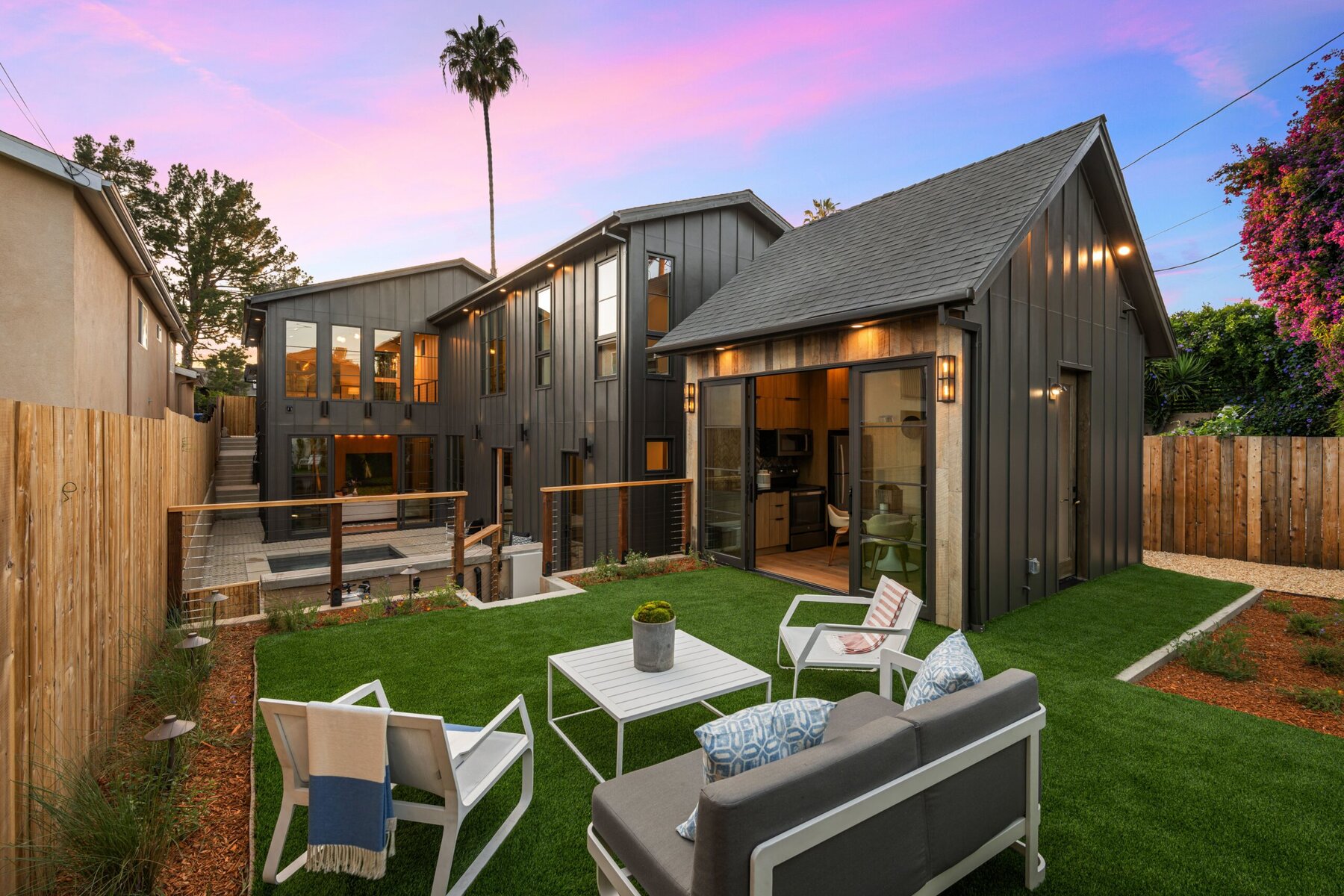
Some ADUs in Miami Springs are detached structures placed toward the rear of the property. Others are positioned to maintain yard usability and visual balance. There is no standard placement because every lot behaves differently.
Early planning allows us to avoid cutting into systems or spaces that the property depends on.

Only after those conversations do layout and system decisions get locked in. This approach reduces mid-project changes and keeps construction steady.

Designing ADUs That Fit the Property

ADUs in Miami Springs should feel like part of the property rather than an afterthought. That starts with layout and scale.
We focus on:

A well designed ADU feels intentional rather than squeezed into the site.

Utility and System Planning for ADUs

Adding an ADU increases demand on existing systems. In Miami Springs, many homes were not originally designed to support multiple dwellings. We review:
Addressing system needs early helps prevent delays and unplanned upgrades later.

Material Selection for Long Term Performance

Miami Springs experiences heat, humidity, and seasonal rainfall that affect how materials age. ADU construction here benefits from choosing materials based on performance rather than appearance alone.
We guide homeowners toward options that:

Material decisions made early often reduce maintenance concerns years later.

Managing Construction on Occupied Properties

Most ADU projects in Miami Springs take place while the main home remains occupied. That requires careful planning and coordination.
We organize construction so that:

This approach helps homeowners remain comfortable throughout the build.

Privacy and Neighborhood Considerations

Enhance your Miami Springs property with ADUs built for privacy and peace. Strategically placed near landmarks like the historic Curtiss Mansion and Miami Springs Golf & Country Club, our designs minimize visual overlap and sound transfer—ideal for quiet living by Heron Park or the Miami River. Each unit features private entries and thoughtful window orientations, ensuring a seamless extension of your home without neighborly tension. Locally crafted, optimized for Miami Springs harmony.

Clear answers early prevent frustration later.

Cost Planning for ADU Building in Miami Springs

ADU costs here depend less on size and more on site complexity.
Key cost factors include:

Clear planning helps homeowners understand where costs come from and how decisions affect the budget.

When ADU Building Makes Sense in Miami Springs

An ADU is often the right solution when:
When planned correctly, an ADU adds value without disrupting how the property functions.

Contact Us

Trusst Your Partner for Home Remodeling

Request a quote from Trusst Construction, serving Miami, Fort Lauderdale, Palm Beach and more with commercial, residential, and multi-family projects.

Business Address:
19790 W Dixie Hwy, Unit 1005, Miami FL 33180
info@trusstconstruction.com

305-786-3199


Service Areas

Why Miami Springs Homeowners Work With Trusst Construction

Homeowners in Miami Springs usually want a controlled process. They want to understand what is possible and what tradeoffs exist before construction starts. They work with Trusst Construction because we prioritize planning, communication, and steady execution. Our goal is not speed. It is building an ADU that works for the property long term.

Planning an ADU Building Project in Miami Springs

ADU building in Miami Springs works best when decisions are grounded in how the property already works. Trees, access, utilities, and neighborhood context all shape the outcome. Trusst Construction helps homeowners plan ADU projects carefully so construction stays controlled from start to finish.

Related Articles

People Also Ask

The cost comparison between building an accessory dwelling unit (ADU) on-site versus purchasing a prefabricated model depends heavily on project specifics. Generally, prefab ADUs can be cheaper upfront due to controlled factory construction reducing labor time and material waste, with many companies offering turnkey packages. However, site-built ADUs, while often more expensive and time-consuming, can offer greater customization to fit unique lot conditions and homeowner needs, potentially increasing property value more significantly. Key cost factors for both include site preparation, foundation work, utility connections, permits, and finishing materials. A detailed cost analysis from local contractors and prefab suppliers is essential, as regional material and labor rates, along with local ADU regulations, dramatically influence the final price.

The cost of an ADU in Miami varies significantly based on size, design, materials, and site conditions. A basic, small accessory dwelling unit might start in the range of $100,000 to $150,000, while a larger, fully-equipped, high-quality unit can easily exceed $300,000. Key cost factors include foundation work, utility connections, permitting fees specific to Miami-Dade County, and whether the ADU is detached or attached. It is crucial to budget for professional design, engineering, and a contingency fund for unexpected issues. For a detailed breakdown of local considerations, including zoning and recent regulatory changes, we recommend reviewing our internal resource, ADU Building in Miami, FL. Always obtain multiple, detailed quotes from licensed contractors.

The cost comparison between adding an addition to your primary home and building a separate Accessory Dwelling Unit (ADU) depends on several factors. Generally, a well-planned ADU can be more cost-effective per square foot because it often uses simpler construction systems and may avoid the complexities of tying into existing home systems. However, a basic bump-out addition might have a lower absolute cost if it's very small. Key cost drivers for ADU include new foundation work, separate utilities, and site access, while additions face costs for integrating with the existing structure's roof, HVAC, and foundation. A major advantage of an ADU is its potential to generate rental income, which can significantly offset the investment. A detailed feasibility study with a contractor is essential to compare specific project quotes and long-term value.

The cheapest option for an ADU is typically a prefabricated or modular unit. These are constructed off-site in a controlled factory environment, which significantly reduces labor costs, material waste, and construction time compared to traditional stick-built additions. Key cost-saving strategies include choosing a simple, compact design (often a studio or one-bedroom layout), utilizing standard finishes, and opting for a detached structure to avoid complex foundation work or major home modifications. While a garage conversion can also be economical, it depends heavily on the existing structure's condition. It is crucial to factor in all site-specific costs like permits, utility connections, and foundation work, as these can substantially impact the final budget.

Constructing a new Accessory Dwelling Unit (ADU) in Miami Springs requires careful planning and adherence to specific local regulations. The process involves securing the necessary permits, ensuring the design complies with zoning codes regarding setbacks, height, and lot coverage, and integrating utilities. Given the high demand for flexible housing, a well-built ADU can significantly increase property value and provide rental income. For detailed, location-specific guidance, we recommend reviewing our internal resource, ADU Building in Miami Springs, FL, which outlines key considerations and steps for a successful project in this area. Partnering with a knowledgeable local contractor is crucial to navigate the approval process efficiently.

The market for accessory dwelling units (ADUs) in Miami Springs is active, driven by the city's zoning allowances and high demand for flexible housing. When considering an ADU for sale, it is crucial to verify its legal status as a permitted structure with Miami Springs Building and Zoning. Key factors include ensuring the unit has proper certificates of occupancy and complies with all local codes regarding size, setbacks, and utilities. A professional inspection is highly recommended to assess the condition of plumbing, electrical systems, and overall construction quality. Purchasing a legal ADU can be a strong investment, offering rental income potential or multi-generational living options, but due diligence on permitting is essential to avoid future liabilities.

The cost of building an Accessory Dwelling Unit (ADU) in Miami Springs, FL, can vary significantly based on size, design, materials, and site-specific conditions. On average, you can expect costs to range from $150 to $300 per square foot for a new construction detached ADU. A basic 500-square-foot unit might start around $75,000, while a larger, more customized 800-square-foot ADU could easily exceed $200,000. Key cost factors include foundation work, utility connections, permitting fees with the City of Miami Springs, and whether you choose prefabricated or stick-built construction. For a detailed local breakdown, including permit strategies and design considerations, we recommend our internal resource ADU Building in Miami Springs, FL. Always obtain multiple detailed quotes from licensed contractors familiar with South Florida's building codes and climate challenges.

Google

Overall Rating

5.0
★★★★★

26 reviews