Which is better — butcher block or granite? After installing both in hundreds of South Florida homes, we can say there is no universal winner. The right choice depends entirely on your cooking habits, design vision, and your willingness to perform upkeep. If you love the warm, organic feel of wood and don’t mind a little monthly maintenance, butcher block delivers unmatched character. If you want a nearly indestructible surface that requires zero daily worry and instantly elevates resale appeal, granite remains a top-tier investment. Below, we’ll break down every detail — from 2026 pricing and local installation challenges to the hidden factors that can make or break your satisfaction — so you can choose with confidence and avoid the costly mistakes we see all too often.
Table of Contents
Head-to-Head: Butcher Block vs Granite at a Glance
We start every project with the facts. The table below distills the core differences our team discusses during initial consultations.
| Feature | Butcher Block | Granite |
|---|---|---|
| Typical installed cost (30 sq ft kitchen, South Florida) | 1,800 – 4,050 dollars | 1,950 – 6,000 dollars |
| Heat resistance | Moderate; scorches at 350°F+ | Excellent; withstands hot pans |
| Scratch and cut resistance | Scratches easily; can be sanded out | Highly scratch-resistant; dulls knives |
| Stain resistance | Prone to staining; needs immediate cleanup | Low porosity when sealed; resistant |
| Water and humidity sensitivity | High; can warp, cup, or mold | Very low when properly sealed |
| Maintenance frequency | Oil every 4–6 weeks; sand and refinish every 3–5 years | Seal every 1–3 years (modern sealers last up to 10) |
| Repairability | Excellent; sanding and refinishing renews the surface | Difficult; chips and cracks need professional repair |
| Expected lifespan | 20–25 years with care; can be renewed indefinitely | 50+ years; essentially permanent |
| Eco-friendliness | Renewable resource; choose FSC-certified wood | Quarried natural stone; transport energy is high |
| Undermount sink compatibility | Not recommended; wood expands | Standard; creates seamless edge |
We developed this comparison using 2026 pricing data from South Florida suppliers, our own project estimates, and industry standards from the Natural Stone Institute and the National Kitchen & Bath Association (NKBA). For a typical 30-square-foot kitchen, these numbers reflect what you can expect to pay with professional installation from a licensed general contractor.
The Butcher Block Advantage: Warmth You Can Renew
In our experience, nothing matches the tactile warmth of butcher block. When a client wants a kitchen that feels lived-in and inviting, we steer them toward hardwood like hard maple, walnut, or cherry. The secret most homeowners don’t realize is that butcher block is one of the only countertop materials you can actually renew. A simple orbital sander and a fresh coat of food-grade mineral oil erases years of knife marks and stains, making it look brand new again.
We have completed full butcher-block islands that, after a decade, still look like the day they were installed because the homeowner followed our simple care routine. That said, South Florida’s humidity introduces risks a homeowner in a dry climate never faces. We always specify a plywood substrate beneath the wood to allow for independent expansion and contraction, and we never recommend butcher block directly adjacent to a dishwasher unless a vapor barrier is installed. We’ve also started advising clients to choose a tropical hardwood like teak or iroko for perimeter counters near sinks; these species naturally resist moisture and termite damage, which is a genuine concern in our region. Source: U.S. Forest Service Forest Products Laboratory, Wood Handbook.
Granite’s Unmatched Durability and Luxury Appeal
Granite has been the go-to upscale surface for decades, and in 2026, it still delivers an undeniable sense of permanence. We tell our clients that a well-sealed granite countertop laughs at hot pans, red wine spills, and daily wear. The stone’s hardness — typically 6 to 7 on the Mohs scale — means you can chop directly on it (though we always suggest a cutting board to protect your knives). Granite’s visual depth, with its one-of-a-kind veining and crystalline flecks, gives every slab a unique artwork quality no manufactured material can replicate.
For South Florida homes, granite offers a critical advantage: it remains dimensionally stable in high humidity. You won’t see buckling or gaps opening up at seams. However, we have learned that not all granites are created equal. Some exotic, heavily veined slabs are more porous and require sealing more frequently. In our design consultations, we guide clients toward granites with lower absorption rates — like Ubatuba, Black Galaxy, or Baltic Brown — that perform brilliantly in coastal conditions. Today’s advanced penetrating sealers with nano-technology can provide up to a 10-year protective barrier, dramatically reducing the old “yearly sealing” chore. We exclusively use these premium sealers on our installations.
True 2026 Cost Breakdown: What You’ll Actually Pay
Pricing transparency is central to our approach. Below is a realistic installed cost estimate for a standard 30-square-foot kitchen countertop in a single-family home in greater South Florida. Labor reflects our region’s prevailing wages for licensed, insured trades.
| Material Grade | Material Cost (per sq ft) | Labor & Fabrication (per sq ft) | Total Installed Cost (30 sq ft) | Annual Upkeep Cost (Approx.) |
|---|---|---|---|---|
| Butcher Block – Standard Hard Maple | 45 – 65 dollars | 25 – 35 dollars | 2,100 – 3,000 dollars | 60 – 80 dollars (oil & wax) |
| Butcher Block – Premium Walnut / Teak | 70 – 100 dollars | 25 – 35 dollars | 2,850 – 4,050 dollars | 60 – 80 dollars |
| Granite – Level 1 (common colors, 2cm) | 35 – 55 dollars | 30 – 45 dollars | 1,950 – 3,000 dollars | 50 – 100 dollars (sealer) |
| Granite – Level 2 (exotic, 3cm) | 65 – 150 dollars | 35 – 50 dollars | 3,000 – 6,000 dollars | 50 – 100 dollars |
| Additional costs: sink cutout | – | 150 – 250 dollars per cutout | Flat add-on | – |
| Additional costs: edge profile upgrade | – | 10 – 25 dollars per linear foot | Varies | – |
Note: All figures in 2026 dollars. These ranges include demolition and disposal of existing counters, template creation, fabrication, and installation. We never surprise a client with hidden fees — every estimate we provide is line-item detailed before work begins. To calculate your specific layout, you can use the NKBA’s project cost estimator as a starting point, but nothing replaces an on-site measurement by a professional.
Aesthetics and Design Flexibility: Making Both Work for You
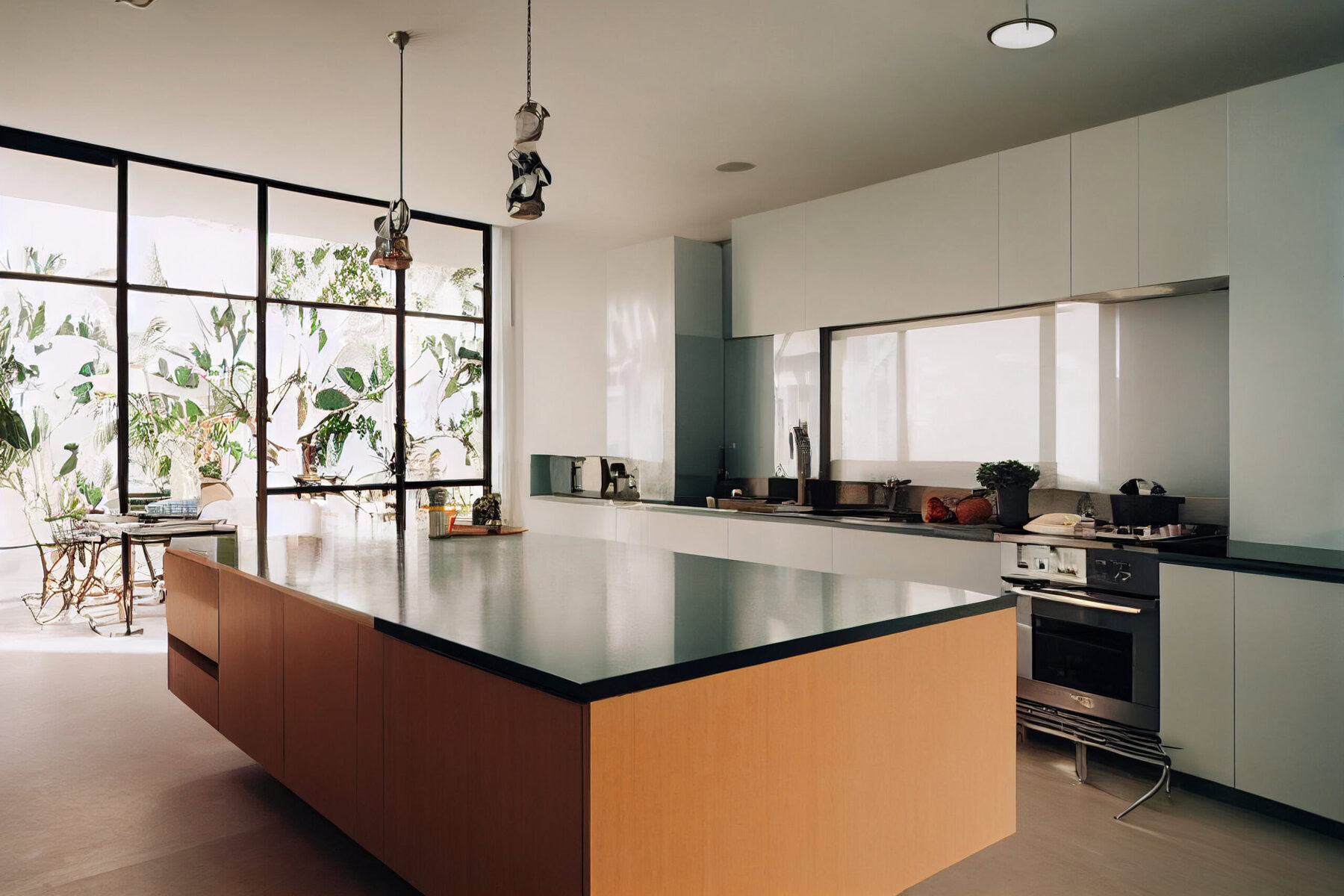
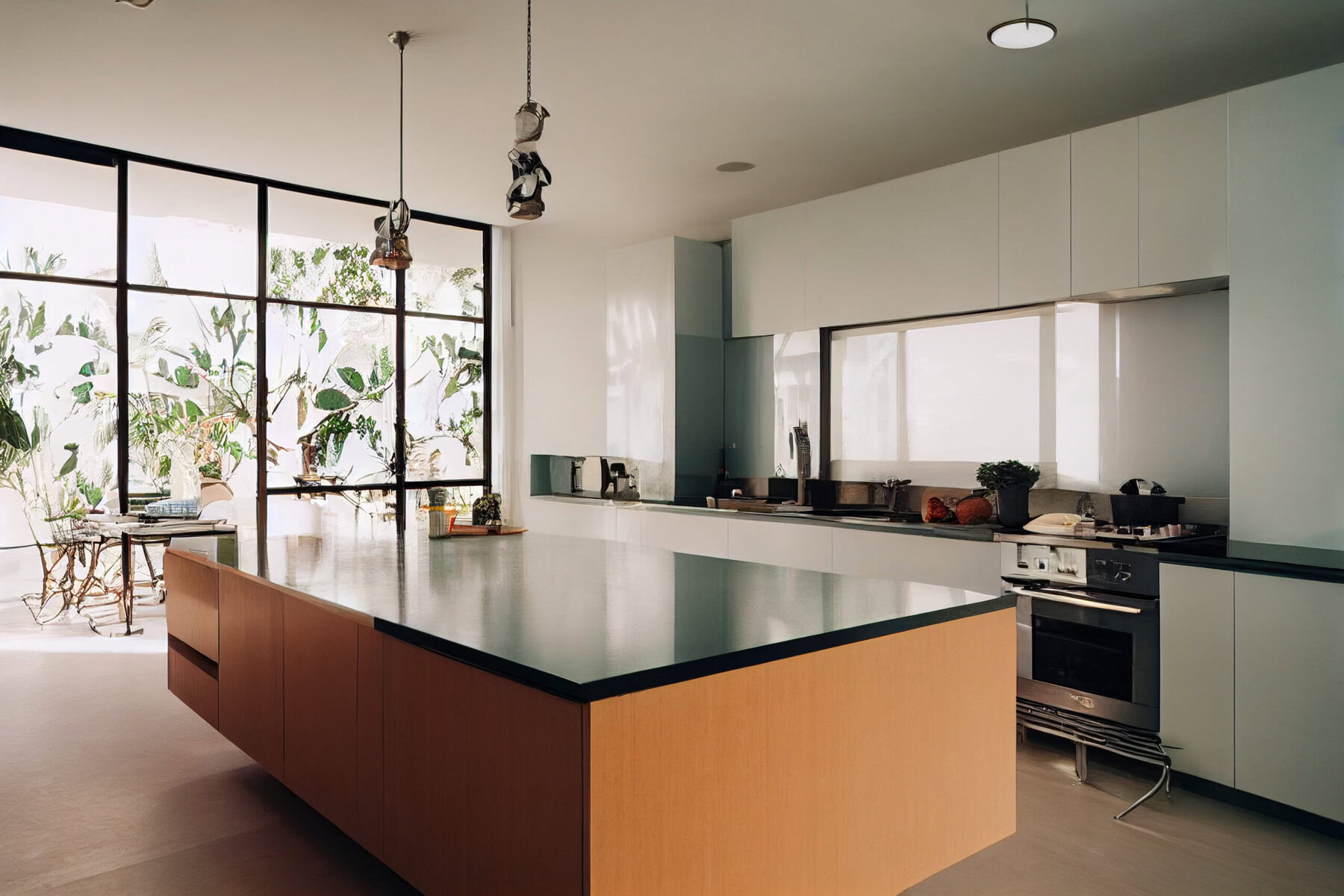
We often design kitchens where butcher block and granite coexist. One of our favorite approaches is a large butcher block island used as a prep and gathering zone, surrounded by elegant granite perimeter counters. This gives you the best of both worlds: a forgiving cutting surface and a maintenance-free workhorse for baking and wet areas. In an open-concept South Florida home, this contrast adds architectural interest and keeps the space from feeling monotonous.
Finishes matter more than ever in 2026. Honed and leathered granite finishes are surging in popularity because they hide fingerprints and etching better than polished surfaces, while giving a softer, organic texture. For butcher block, we offer a choice of edge grain (stripes visible, more stable) or end grain (classic checkerboard, ideal for heavy chopping but slightly more expensive). We’ve learned that a dark-stained walnut butcher block paired with a white leathered granite perimeter creates a stunning modern farmhouse look that our clients love.
Installation Realities: What We Wish Every Homeowner Knew
Granite’s weight — roughly 18 to 25 pounds per square foot — means cabinet bases must be rated to carry the load. In older South Florida homes, we frequently reinforce the base cabinets or add support brackets for overhangs exceeding 12 inches. We also ensure the subfloor can handle the point loads, especially in elevated coastal homes on pilings.
Butcher block requires a completely flat, reinforced substrate because wood will telegraph any imperfection below. We always install a moisture-resistant plywood underlayment, and in humid kitchens, we finish all six sides of the slab — including the underside — with a marine-grade sealant before installation. This is a step many discount installers skip, and it’s why we’re called in to fix warped counters every summer. For undermount sinks, we steer butcher block clients toward drop-in or flush-mount options. When a client insists on the look of an undermount with wood, we use a solid surface composite insert around the sink, which we have found eliminates the swelling risk.
Permitting is another hidden factor. As a licensed general contractor, we handle all local building permits and inspections. In Miami-Dade and Broward counties, any countertop that affects the structural cabinet anchoring may trigger a permit review, especially in condominiums with strict building codes. We navigate that process so our clients don’t have to.
Resale Value and the Return on Investment
Our real estate partners in South Florida consistently tell us that granite countertops are one of the top three features buyers notice first. The 2025 Remodeling Impact Report from the National Association of Realtors ranked kitchen upgrades as one of the projects with the highest joy and value scores. A quality granite installation can recoup 60 to 80 percent of its cost at resale. Butcher block, while beloved by cooking enthusiasts, has a more niche appeal. It tends to perform best in artisan or contemporary-styled homes. In our experience, the most successful resale strategy is to install a granite perimeter with a butcher block island — it appeals to both luxury buyers and passionate home chefs.
Sustainability and Health: What the Science Says
Wood countertops are a carbon-storing, renewable resource, particularly when you choose FSC-certified domestic hardwood. Granite is a natural stone, but quarrying and transporting it from Brazil, India, or Italy involves significant embodied energy. On the other hand, granite does not off-gas and is completely inert once sealed. The radon concern that occasionally surfaces has been thoroughly debunked by the EPA and the American Association of Radon Scientists and Technologists; the amount of radon emitted by a typical granite countertop is a fraction of the background level in outdoor air and poses no health risk. Still, if a client wants to be absolutely certain, we can test any slab before fabrication. Source: EPA, “Granite Countertops and Radon.”
The South Florida Factor: Climate, Code, and Common Pitfalls
We are a South Florida contractor first and foremost. We’ve seen how hurricane-season humidity can buckle a poorly sealed wood counter in a matter of weeks. We know that many condominium associations require specific soundproofing underlayments that can affect countertop installation. We’ve dealt with the challenge of salt air corroding metal brackets under granite overhangs if not correctly protected. Our designs always account for these conditions.
For clients near the coast, we often recommend pairing granite with corrosion-resistant stainless steel or epoxy-coated supports. For butcher block, we advise against installing it in a kitchen that will be left unairconditioned for extended periods — the expansion and contraction cycle is simply too aggressive. These are details a national big-box installer will not think to flag, but we consider them our responsibility.
Our Verdict: Which Countertop Should You Choose?
Choose butcher block if you are an avid home cook who loves the patina of a well-used kitchen, you are willing to oil the surface monthly, and you view the counter as a living tool you can sand and refresh over time. It’s also ideal for a statement island where most heavy prep happens.
Choose granite if your priority is a zero-maintenance, forever surface that withstands everything a busy family throws at it, you want the highest resale appeal, and you prefer a cool, polished workspace. It is the ultimate worry-free luxury.
Our most requested solution? A hybrid kitchen: granite on the perimeter, butcher block on the island. It solves the maintenance-versus-function dilemma and gives you the best of both materials.
No matter which direction you lean, our single integrated team — from architecture and design through construction — will ensure your countertops are specified, permitted, and installed to handle South Florida’s unique demands. We assign one dedicated point of contact who manages all trades and schedules so you never have to chase down answers.
Frequently Asked Questions
How long do butcher block countertops last in a humid climate like South Florida?
With proper installation and care, butcher block can last 20 to 25 years or more in South Florida. The critical factors are using a stable hardwood species, finishing all six sides with a moisture-blocking sealer, and maintaining consistent indoor climate control. We’ve refinished 30-year-old butcher block tops that were still structurally sound because the original contractor used a proper plywood substrate and expansion gaps.
Do I need to seal my granite countertop every year?
Not necessarily. Modern penetrating sealers with nano-polymer technology can protect granite for 5 to 10 years, depending on the stone’s porosity and usage. We test the seal by sprinkling water on the surface during annual maintenance checks; if it beads, the seal is intact. If it soaks in, we apply a fresh coat. Our clients typically go 3 to 5 years between sealings for a kitchen in daily use.
Can I put a hot pan directly on butcher block?
We strongly advise against it. While wood is less likely to crack from thermal shock than stone, temperatures above 350 degrees Fahrenheit will scorch and discolor the surface. The burn mark can be sanded out, but that requires refinishing the entire top to maintain an even appearance. Always use a trivet.
Is granite safe for food preparation?
Absolutely. Once sealed, a granite countertop is non-porous and easy to sanitize. We recommend cleaning with a pH-neutral stone cleaner. The EPA and numerous studies have confirmed that granite does not emit harmful levels of radon or other substances. As an extra precaution, we can test any slab for radon or other volatiles before cutting.
Which countertop adds more resale value to my South Florida home?
Granite remains a top selling feature and consistently delivers a higher return on investment than butcher block in the broader market. However, a well-designed kitchen with a butcher block island and granite perimeter can appeal to both luxury buyers and serious cooks, potentially setting your home apart. Local real estate agents we work with confirm that quality kitchen surfaces are one of the quickest ways to move a listing.
How soon can I use my kitchen after the countertop installation is complete?
For granite, you can use the counters immediately after installation and final sealing — typically the same day. For butcher block, we recommend allowing the final oil or sealant to cure for 24 to 48 hours before heavy use. We always provide a detailed care timeline and leave behind a maintenance kit so you can enjoy your new surface right away.
Let’s Build Your Perfect Kitchen
At Trusst Construction, we don’t just install countertops — we deliver a completely coordinated kitchen transformation. As a licensed general contractor serving greater South Florida, our single integrated team handles everything from architecture and design to final permits and installation. Every design is tailored to your lifestyle, with transparent, itemized pricing and written change approvals so you know exactly where your money goes.
Start your project with a no-obligation consultation. Call us at (305) 786-3199 to schedule a meeting. Let’s turn your vision into a kitchen you’ll love for decades, with a surface choice that makes sense for how you really live.